Recently I've experimented a little with twitter, but so far I'm not a big fan.
I really don't grok people claiming the 140 char limit to be 'liberating';
to me it's just one big annoyance: if I don't have to say anything then
I tend to shut up - and if there is something noteworthy that I would indeed
like to share, then it's quite unlikely to fit into that dinky straightjacket
format. (It's pretty obvious that I'm not a big SMS user either.)
Most of what I've seen of twitter feels like looking at JPEGs with quality
level 1; sure,
you can recognize that there's something on that picture but its
nowhere near intelligible and and it hurts my eyes.
On the other hand, I do see uses for this kind of sparrowy chirping;
for example, as a platform for quick updates
about local speed cameras and the like
I think it's very good.
Ambivalence, thy name is az...
Update (Fri 20.10.2017 22:43):
nope, not for me. my twitter account is gone and i'm going back
to literate communication.
[ published on Thu 20.06.2013 15:48
| filed in
interests/comp
|
]
after 2.9 years half of them will have died.
i have two colo'd servers, each with two disks, hosted in a well
cooled and ventilated datacenter, all four disks have had less than 75
load cycles, have never been hotter than 29 degrees celsius - but regardless
of that nice environment, the barracudas suck.
the second out of my four Seagate Barracuda 7200.14
is dying, after a measly 2.9 years of constant operation.
the first of the bloody things died precisely at the 2 year mark.
[ published on Mon 25.01.2016 07:24
| filed in
interests/comp
|
]
english is pretty inconsistent - but hold the presses: this can't be
news to anybody.
this is pretty silly but fun, maybe even news: a few years after
the austrians, the czech now also accept pastafarian traditional headgear!
this is pretty cool and not silly at all: the czech team of developers around
Jan Mate (inf-it.com) have developed two pretty calendar and contacts
web applications that talk calDAV and cardDAV - and it's all self-contained
ECZEMAscript: you park it somewhere (not necessarily on a server), configure
it a little and hey presto, it'll talk to your calendar server.
even better: both CalDavZAP and CardDavMATE are
open and free software under the (A)GPL.
i use both occasionally (with my radicale server), works really well.
colanders off to these guys!
[ published on Fri 01.01.2016 09:37
| filed in
interests/comp
|
]
maybe it's the Mother Of All Rants? Well, maybe not - but he's got a very good point there
(one that i totally share, not that anybody'd care about me):
that unnecessary obscurity is a lousy design choice.
very much related: ESR's The Art of Unix Programming, which I used quite a lot when I was teaching - some of my students may even have gotten the point...
(I also like the nicely captured photo on this report...)
[ published on Sat 28.11.2015 08:32
| filed in
interests/comp
|
]
hello, i'm az and i'm an old fart: i really
like graffiti -
i always have, since 1998 when i bought my first palm iii.
click here for the rest of the story...
[ published on Sat 25.04.2015 19:21
| filed in
interests/comp
|
]
Even its original perpetrator agrees.
I don't like my browser running code provided by strangers (who are
very unlikely to have my best interests at heart).
On the other hand, having a site that works reasonably well with dinky screens
is nice.
Combine those two sentiments with my love of tinkering, and it won't
come as a big surprise that I eventually did find a way to have both
responsive layout with a popup navigation menu, but without any JS (or
server-side magic).
click here for the rest of the story...
[ published on Sun 22.03.2015 11:13
| filed in
interests/comp
|
]
Two of my unstressed WD20EARX disks have just crapped themselves
almost simultaneously after 21846 hours of operation (or 2.493 years),
with just 49 power cycles and disk temperatures never above 45 degrees C.
Both disks were manufactured in June 2011, but WD's warranty period for
consumer gear is only two years.
The culprit? WD's damn idle3 timer
which I wasn't quite aware of until a few days ago; hdparm only
says 'power management not supported' and I trusted that to mean 'no spindown'.
That timer contraption parks the disk after just 8 seconds of idleness.
Guess what: both of mine shipped with the default setting, 8 seconds, and
racked up a load cycle count around 2377000. (That WD disk series is rated
for a minimum of 300000 load cycles, certainly not 3 million).
Update (Sun 22.02.2015 11:09):
Seagate: see data run! run, data, RUN!
Well, the competition isn't much more reliable. There are four
ST2000DM001-9YN164 in my colo'd systems at the other end of the world
(climate-controlled datacenter, stable power, no nasties whatsoever).
One of the damn disks is going tilt very, very quickly. After just a measly two
years. See az not happy. Run, Seagate, RUN! >:-(
Power_On_Hours 17774
Power_Cycle_Count 24
Power-Off_Retract_Count 17
Load_Cycle_Count 131
Airflow_Temperature_Cel 25 (Min/Max 23/32)
Temperature_Celsius 25
And the damning:
Current_Pending_Sector 88
Offline_Uncorrectable 88
And it's deteriorating pretty quickly, about 16 new duds every day or two. Fortunately it's
all RAID-1 and the replacement is already ordered.
[ published on Sun 23.02.2014 17:47
| filed in
interests/comp
|
]
Have a look at one of this year's obfuscated C contest winners:
This entry weighs in at a magical 4043 bytes (8086 nibbles, 28,301
bits). It manages to implement most of the hardware in a 1980's era
IBM-PC using a few hundred fewer bits than the total number of
transistors used to implement the original 8086 CPU.
Actual source code, screenshots of it running autocad etc. here.
Some people definitely have too much time and/or too much spare brain
power - I'm envious :-)
[ published on Mon 06.01.2014 17:31
| filed in
interests/comp
|
]
The web setup of the local $male_sheep bank cretinly
(not quite a typo) fits their namesake's pattern.
Yet another bunch of dimbulbs who insist their customers have to
laboriously go hunt and peck on an onscreen 'keyboard' to enter
their passwords, because it's for the gasp Extra Securrrriteeee!
Imagine all the ATM keypads were replaced with giant Twister mats on
the sidewalk, so that people have to hopscotch their PIN in public:
ridiculous - but roughly as 'secure' as the damn onscreen keyboids.
We hates them,
oh we do - with a mouth-frothing passion.
Fortunately the combo of jQuery and
greasemonkey
makes a decent anti-foaming agent, and I'm stubborn enough to not
give up easily.
Here's the result, my small but nifty userscript which I'm sharing just as usual; a goodie that
makes the pain go away and lets you use your ten fingers as they were
intended.
(I find jQuery actually pretty fun to program with - if only it didn't
involve EczemaScript...)
Anyway, enjoy the fruits of my labour and don't get fleeced :-)
[ published on Sat 09.11.2013 19:07
| filed in
interests/comp
|
]
Not my car, of course - that's a 4-cylinder boxer
(maybe opoc in the future?) - but my computer
infrastructure is now using IP version 6 (except a few embedded/legacy boxes
which don't support it).
Changing everything over was a bit interesting; both my local
ISP (Internode
and the colocation operator where my servers
live (Silver Server) offer IPv6 addresses but for
the local ISP there were a few hoops to jump through: PPPoE
for the DSL, and on top of that you need DHCPv6 to activate the
IPv6 Prefix Delegation.
So far, so unspectacular - except that the state of DHCPv6 in debian is
pretty lousy: the standard ISC daemon
doesn't work on PPP links, full stop; the dibbler thing is reported to
not do prefix delegations; the wide-dhcpv6-client is not
pretty and a bit under-documented but can be made to work - and that's
all the offerings.
I find it interesting that so far the spammers and the scammers
don't seem to be interested in IPv6; after a week I've yet to see a single
spam attempt coming from v6 addresses (my yearly average is 3 spams
per minute).
[ published on Sun 07.07.2013 13:12
| filed in
interests/comp
|
]
...on yourself: that's what
it feels like doing an in-place migration of your computer
from 32-bit debian to the 64-bit version. you transplant the libraries
and the linkers, and hope that you match up enough 64-bit binaries
with their libs and linker just in time so that the patient don't die
from anaphylactic shock.
i really don't like reinstalling numerous boxes from scratch, losing all my
configuration magic, so i decided to try making the changes in place,
on the "live object".
it's a pretty tense exercise; there are numerous situations where
you're a single keystroke away from a totally hosed system. in the end
i didn't have to boot my rescue media, not even once (but having a
static busybox saved me twice, as well as knowing
about ar vx whatever.deb...)
debian is really cool but of course there's no automation for that
kind of operation so you have to hold apt and dpkg's hands quite a bit
to clean up your mess, but it's doable and even fun (once it's done :-)
and i've got four more boxes to mangle...)
[ published on Mon 29.04.2013 10:45
| filed in
interests/comp
|
]
I've been using Palm PDAs since 98, and I liked PalmOS a lot. Still, after
Palm gave up on it I've been thinking about replacing my phone+pda with
something slightly more modern: not necessarily because my Centro wasn't
sufficient, but because I looked for better networking capabilities.
Some months ago I finally did switch to an Android phone. Which I like, too,
with one major exception: the automatic
assumption that you'll entrust all your personal info to Google and the lack
of other options (at least in the basic load-out). I categorically refuse to
do that, and am willing to devote pretty much any
amount of effort to degoogle my infrastructure - without losing overly
much in the way of essential services.
This post describes how I got my Android phone pretty much google-free.
click here for the rest of the story...
[ published on Sun 17.06.2012 18:25
| filed in
interests/comp
|
]
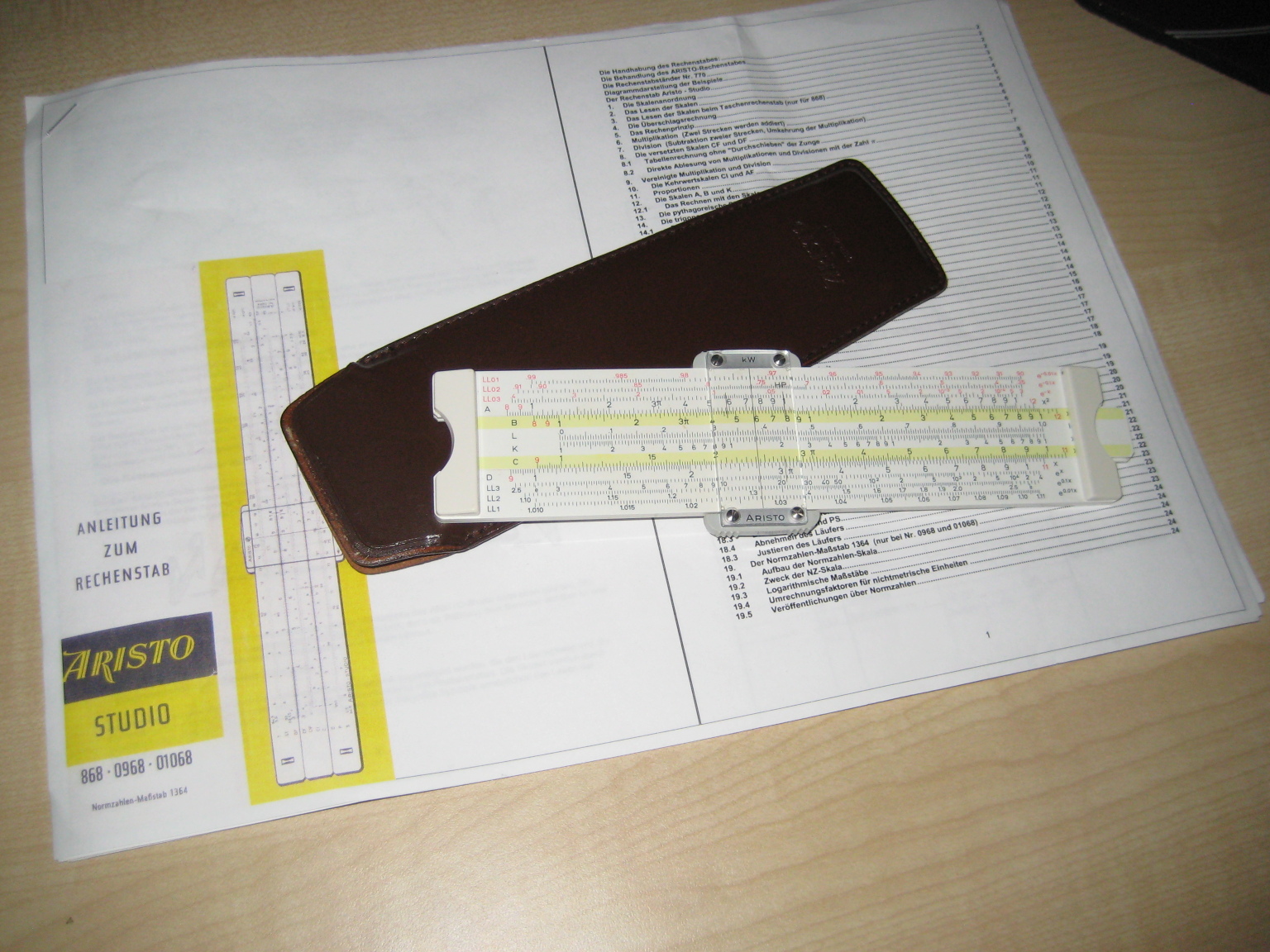
...doesn't have to be high tech. I've got a new toy that I really like:
It's a Aristo 868 slide rule, and I find it pretty amazing
how much you
can do with it. Best of all: no batteries :-)
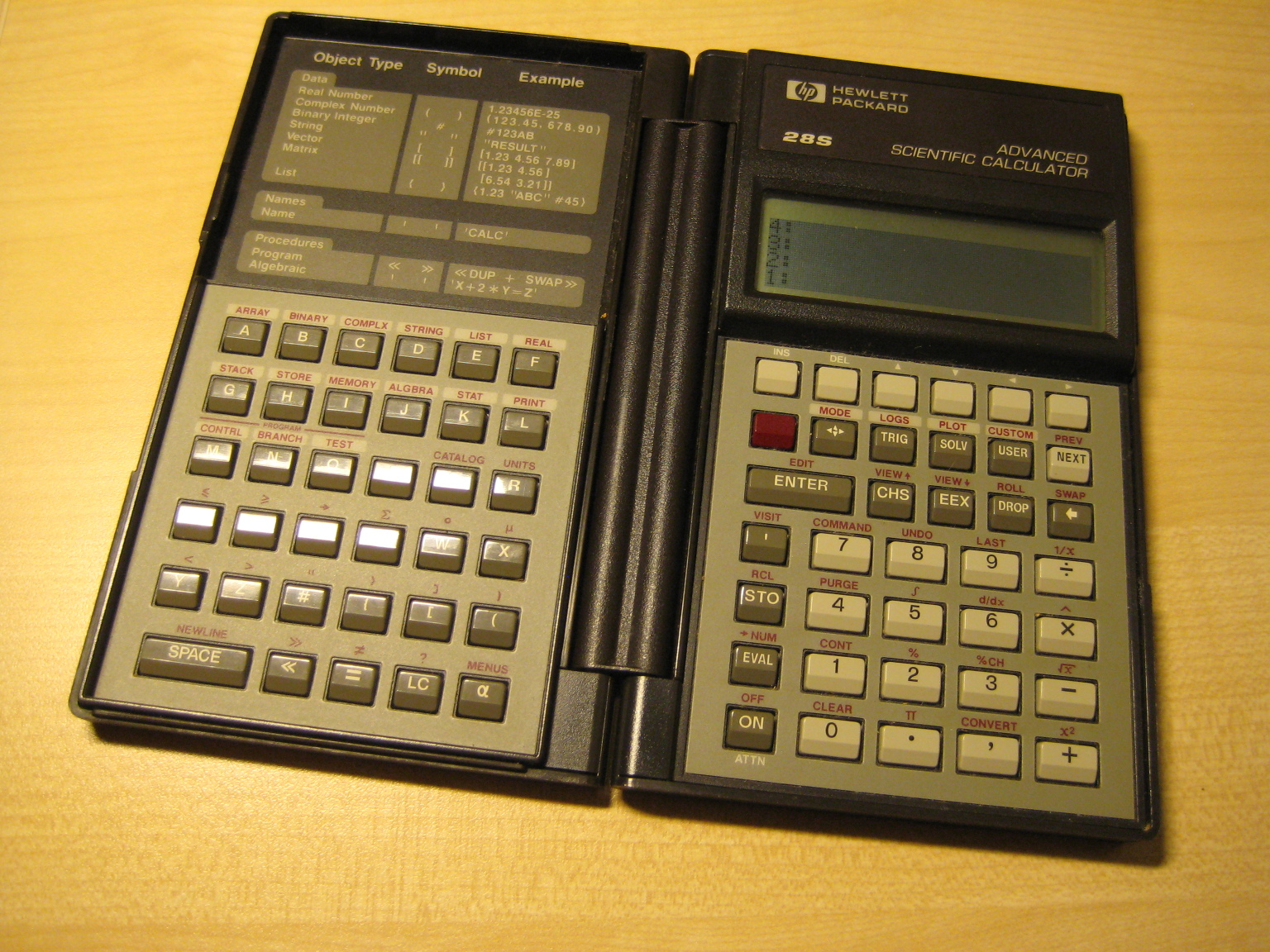
I'm obviously not against high tech, for example:
That's my trusty HP 28S, which I got in 1988 - RPN forever!
But still there is a certain minimalistic appeal to the simple
magic of sliding log scales...
[ published on Thu 15.12.2011 22:29
| filed in
interests/comp
|
]
It's a good day in my world when my favourite game, Sturmovik, fully works
on Linux under Wine, and
better, more reliably and at least as fast as on Windoof.
That also includes the TrackIR, thanks
to these guys and
their Linux-Track project - which is still a bit rough in places
but generally works fine with a variety of hardware (from webcams to TrackIRs).
In addition to the Linux-track stuff you'll also want the Linux-Track WINE plugin
which presents Windoof apps with a TrackIR-compatible
API. That thing was a pain to get running, and you might want to check
out this patch by me to make it work properly with recent Linux-Track revisions.
Apart from those: no real problems after some initial conf.ini tinkering;
no more inexplicable stuttering under Windoof, no more dualbooting and
smooth performance with graphics options close to the top levels.
[ published on Tue 03.05.2011 23:00
| filed in
interests/comp
|
]
One of the banks I deal with uses one-time transaction numbers
which they send in bulk by paper mail every now and then. (Pity that the local
banks aren't as enlightened...)
The notion of "TransAction Numbers" I like, carrying the paper slip
I don't - because paper encrypts so very badly and I'm lugging
my Palm with me all the time anyway.
gocr takes care
of the OCR, and generally works fine but BSTS...if comparing
two sheets of meaningless numbers wasn't so ridiculously, mind-numbingly, dull.
Can't have that.
So I had to look for a cheap, quick and dirty solution for that not-quite-problem, and after ten minutes I had it: espeak.
It's a fairly simple speech synthesizer, which unfortunately insists on
pronouncing numbers as numbers, not individual digits, but a
trivial half-line of perl data massaging took care of that.
Sure, espeak sounds like a post-lobotomy HAL 9000 with a hangover, but hey,
it makes sanity-checking of the OCR results a lot faster and easier.
(Enlightened) Laziness is a virtue :-)
[ published on Sun 29.08.2010 23:24
| filed in
interests/comp
|
]
The Citibank onscreen keyboard reappeared after an
overhaul of their web site (as usual not making it any better, but
Now With More Shiny Crap!). Anyway, it's 2010 and onscreen keyboards are still
a damn stupid idea for password entry - and so my Citibank-Demouse Greasemonkey
script got an update.
[ published on Sat 20.03.2010 13:10
| filed in
interests/comp
|
]
If you are using spamassassin without sa-update you
will not like to hear that as of 5 days ago spamassassin has
pretty much declared open season on all your mails:
Due
to an incredibly gross and dirty bit of rule all properly dated
mails get an extra 3.6 added to their score. kablam!
Botch/Fix: edit /usr/share/spamassassin/72_active.cf,
and change the regexp for FH_DATE_PAST_20XX to something that doesn't fire
in the near future (like 20[2-9][0-9]). Don't forget
to sa-compile if you use compiled spamassassin rules.
[ published on Tue 05.01.2010 21:06
| filed in
interests/comp
|
]
This
is not a Beatles song.
Horricle + Sun = the horror, the horror.
[ published on Tue 21.04.2009 11:29
| filed in
interests/comp
|
]
I've got a netvista thinclient serving as jukebox in my bedroom.
Recently I wanted to switch to a faster wireless adapter, which required
moving to the 2.6 kernel series. This is especially painful for the netvistas,
but nevertheless possible (despite some sources claiming that it won't work).
Here's the rundown.
click here for the rest of the story...
[ published on Thu 10.04.2008 21:01
| filed in
interests/comp
|
]
I've got a new toy,
click here for the rest of the story...
[ published on Thu 21.08.2008 13:19
| filed in
interests/comp
|
]
I hate udev. It does not work in settings very crucial and important to
me (ldap-nss) and it's a huge step back from hotplug in terms of useful functionality.
Stupid complicated config environment, bloated and it does not load modules on demand.
Dear udev authors: you can keep that crap and i'll stick to what works,
is small and almost semi-elegant: hotplug.
click here for the rest of the story...
[ published on Mon 18.08.2008 13:40
| filed in
interests/comp
|
]
Emacs and exmh go together very well, but of course there's
spots where things rub across. Today I scratched such an itch successfully:
I now have access to exmh's address database from emacs (and so can you).
click here for the rest of the story...
[ published on Wed 23.04.2008 00:29
| filed in
interests/comp
|
]
...but quite nice. I've got my own ideas about how to manage my collection
of digital photos and so I wrote my own tiny, idiosyncratic but sufficient
photo manager five years ago (says rcs; hmm, those years went quickly!).
Now that Conny has a shiny digital camera of her own (and a bit of
associated trigger-happiness)
she also needs something to organize her pics with. And while my
photomanager is
fine for me Old Fart, it's a little bit gnarly. So I looked at more
user-friendly (but not idiot-friendly) solutions. And voila, the first
apt-cache hit was already what I had been looking for.
Martin Herrmann has written "martin's picture viewer"
aka mapivi, which
is more than just a viewer (a feature which is fairly irrelevant to me).
It's written in perl plus tcl (important to me), it's a photo
manager (ditto) and it
keeps pretty much all info where relevant: in the photo files themselves.
The last is most
important IMHO, because it frees me from sundry databases, proprietary
overview formats and the like. mapivi uses EXIF and IPTC metadata to
record pretty much anything you can think of in extra segments of your jpegs
(and other image formats that allow such metadata storage).
The thing is a bit rough in places but works very well for a 0.x release,
and the combo of Perl and Tk is really fun to work with.
I've immediately gone full steam ahead and coded the two plugins I need
to emulate the few features my photomanager had over mapivi (complete
with balloon popup help texts for Conny); also submitted
one patch to the upstream author.
Gone is my photomanager, and
welcome mapivi. Not Invented Here indeed :-)
[ published on Wed 16.04.2008 13:07
| filed in
interests/comp
|
]
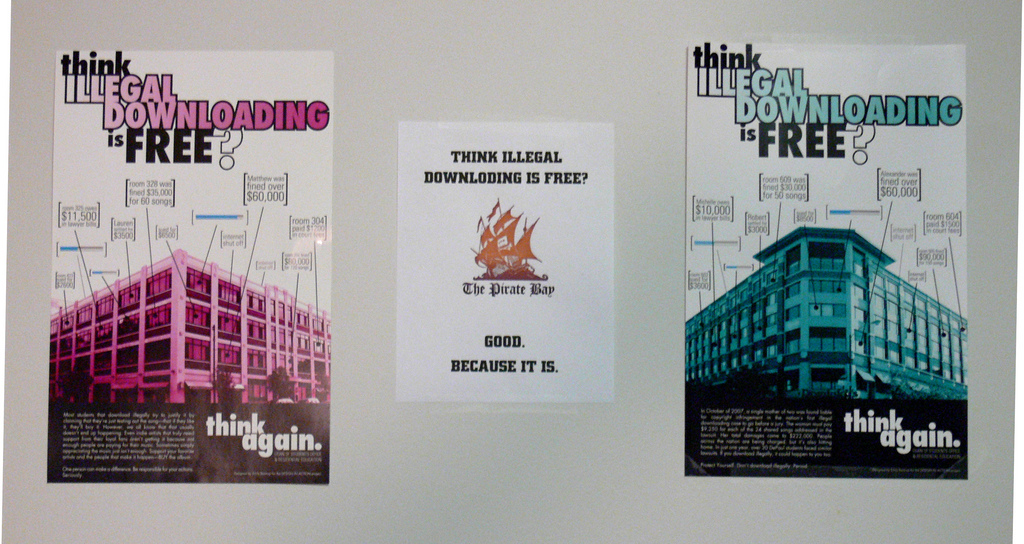
...with a FREE spelling mistake, but nevertheless excellent.
(source:some flicker user via Cryptogram)
[ published on Thu 07.02.2008 08:47
| filed in
interests/comp
|
]
It's amazing what they managed
to squeeze out of that poor 6502...
[ published on Sat 22.09.2007 15:53
| filed in
interests/comp
|
]
today i got my new (well, less than a decade old) sun to replace
my last dead ultra2: a netra 120 (aka sun fire v120).
but what a noisy bugger!
click here for the rest of the story...
[ published on Thu 13.09.2007 23:26
| filed in
interests/comp
|
]
should you be so unlucky to have to use a box with onboard Intel "Graphics",
specifically a 965Q chipset, and also one of those fat Dell screens which
suck at all resolutions but 1680x1050, and maybe even want to run debian
Etch (without testing or experimental or somesuch),
then you'll hate all
the involved hardware manufacturers. (Likely you do that anyway, for unrelated
crimes against syadmins but regardless: THIS time i did find a way to coerce
them to function.)
click here for the rest of the story...
[ published on Wed 12.09.2007 13:19
| filed in
interests/comp
|
]
...but rather with them. Nevertheless, here's a pretty
cool game I've started playing recently: Terminus, a space FPS/RPG thingie
which rocks: a solid Newtonian physics model, good graphics, both linux and
win supported natively (on the retail cds) and so on.
What's even better is that the Underdogs have the game downloadable
in its full glory (abandonware; released in 2000).
[ published on Tue 11.09.2007 10:12
| filed in
interests/comp
|
]
...and it doesn't dig many if not most of my files. Damn dumb beast!
Well, no more. swish-e seems to
be better behaved, and actually works! duh
These guys have cooked up a tiny perl CGI frontend (which I've reworked
and cut down a lot further), and the search functionality on this site
works again.
I've also fixed a long-standing annoyance of blosxom: plugins can't
cleanly set the title of a page from the story title, because the header
plugins run first and the story plugins have no official access to the
output. The fix is Really Dirty, in the best tradition of blosxom which
is Abysmally Dirty Code: a plugin with a sub last {...}
that massages $blosxom::output. If it finds exactly one story in there,
then it changes the <title> to that story's title. Hideous but
it works, and the search interface can display story titles instead of
just the boring story links.
If you want to play with the Abominable Code for this stuff, let me know.
fakefake
[ published on Wed 16.05.2007 16:32
| filed in
interests/comp
|
]
I dislike spam, very much, and repeat offenders deserve all my wrath.
Here's another use of the iptables recent module in a very cheap and simple
manner, to limit the spam blasters' effects on me and my servers' life.
(I've said nice things about ipt_recent before here and
here, both with example applications.)
I've just added these extra rules to the firewall setting on my
mail servers:
 # smtp access is controlled by previous behaviour: spam me and you lose.
iptables -A INPUT -p tcp --dport 25 -j smtplimited
 # smtp: if mimedefang has flagged you as bad, you lose for 12h
iptables -A smtplimited -m recent --name SMTP --hitcount 1 \
   --seconds $((12*3600)) --rcheck -j TARPIT
 # clean up the old entries to unclog ipt_recent
iptables -A smtplimited -m recent --name SMTP --remove
 # and let people through if they've been good in the past
iptables -A smtplimited -j ACCEPT
My mimedefang filter has been instructed to (do the perl equivalent of)
echo "+$ASSHOLE_IP" > /proc/net/ipt_recent/SMTP
whenever it detects an asshole that tries to:
- send email with a non-existent sender's address
- send email to one of the spamtraps within my domains
- send email to nonexistent addresses within my domains
- send me spam (where the degree of spamminess is beyond any reason
for doubt)
- send me viruses
(The decision logic is actually a bit more complicated: I certainly don't
blacklist known forwarders and backup MXes.)
The net effect is that when you do something nasty to me (email-wise),
all your subsequent connections to my mail servers are tarpitted for the
next 12 hours.
Works great, easy to tweak if you want to be more lenient (just up the
hitcount and adjust the following --revove rule) and reduces the time
my systems have to waste on repeating the checks for surefire rejections
on the smtp-envelope level.
(I usually get about 5000-10000 rejections per server per day.)
[ published on Sun 13.05.2007 15:40
| filed in
interests/comp
|
]
newer...
older...