recently a colleague at work prodded me (gently ;-)), saying she still looks
forward to seeing my holiday photos...of which there haven't been any
for too long.
well, i haven't been camping since last year's trip to haddon corner...but mid-september i took a short little trip to girraween NP, in the
granite belt region pretty much on the QLD-NSW border.
click here for the rest of the story...
[ published on Sat 05.11.2022 19:28
| filed in
interests/au
| tagged camping, hiking
|
]
I use strong crypto wherever I can, and naturally for email also.
All email I send is either PGP signed or signed and encrypted with
one of my keys.
If you receive email from any of my addresses without signature you
should doubt its authenticity!
click here for the rest of the story...
[ published on Sun 09.03.2014 01:44
| filed in
interests/crypto
|
]
finally - two years after the last big trip there
was an opportunity for another, not quite that long but
still good little trip out west.
this time the tentative target was mainly queensland's channel country region, with particular spots of interest being
currawinya national park, the burke and wills dig tree, haddon corner and
diamantina national park.
not everything worked out exactly as hoped...fine, that's life. i still enjoyed
it quite nicely, even if i did cut it somewhat short, to ten
days.
here's what (little) i've got to show and tell about the trip.
click here for the rest of the story...
[ published on Fri 24.09.2021 20:41
| filed in
interests/au
| tagged roadtrip, camping, outback
|
]
elvis, who? i don't think there are many people left who care about
that guy anymore. lots fewer will care about the fact that i, too,
have left a building...and a town, and an area.
4 weeks and 4 days ago my house went up for sale, 4 weeks ago i signed
the contract and today i've left both house and gold coast behind, for good.
16 years in the same house was enough.
until i find a new nice place for sale near my new workplace (archerfield
and/or carole park) most of my stuff is staying in rented storage,
an i'm staying at a friend's place...not quite a hobo :-)
[ published on Sun 09.02.2020 17:43
| filed in
interests/au
| tagged gold_coast
|
]
..but just maybe they might mellow a bit, can't hurt.
i just read that the
ACT has decided to legalise personal cannabis use;
one of the odd things here is that the ACT is the last state you'd
expect to make such a move, with a demographic dominated by
politicians and governmental agencies.
the other odd thing is that the legalisation means not much, apparently,
as you could still be charged under commonwealth laws. oh
the convolutions!
[ published on Thu 26.09.2019 17:03
| filed in
interests/au
|
]
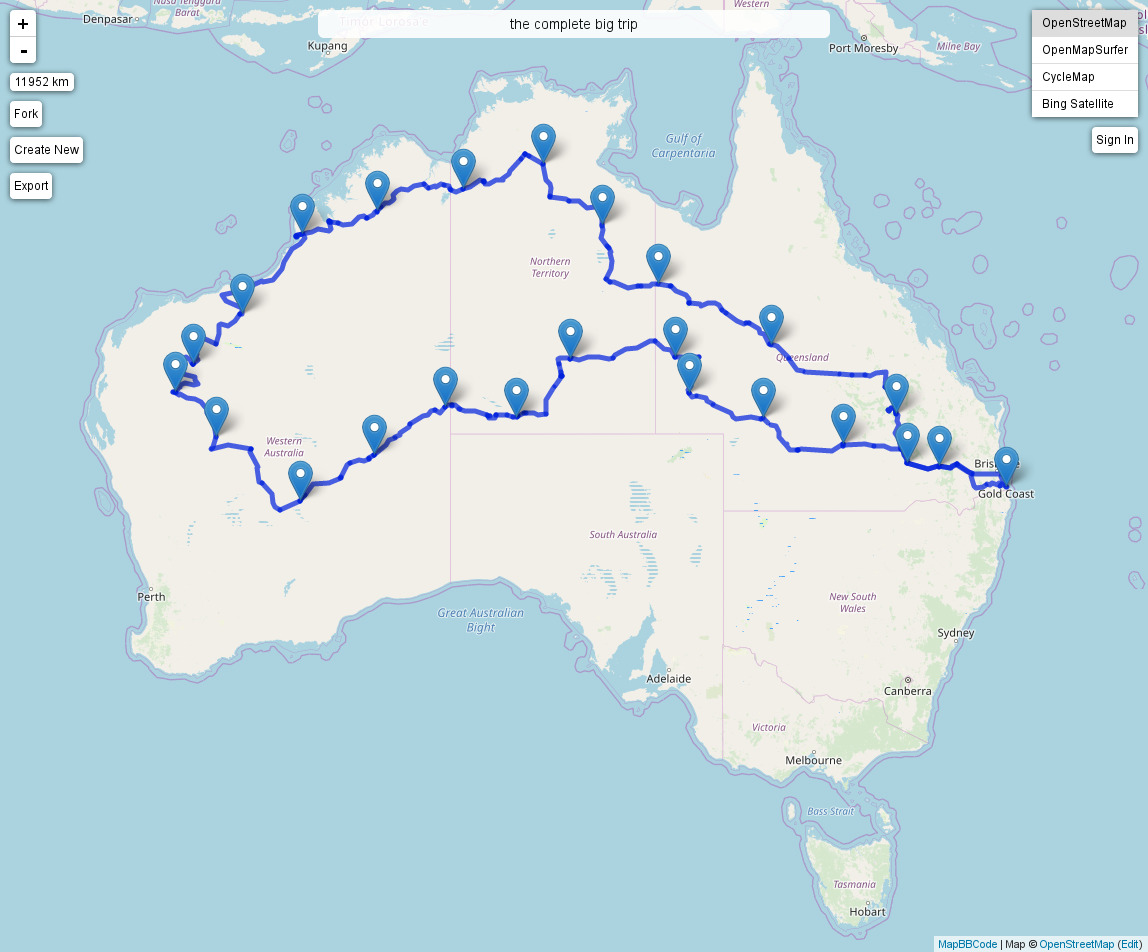
i've just returned from a four week road/bush/camping trip not quite halfway around australia.
the plan this time was pretty mininal: let's travel to and through central
australia! (off the boring main roads where possible.)
the idea was that i'd go at least as far as alice springs following the outback way, and bail out there if i didn't enjoy the trip; otherwise
to continue on to WA via the great central road, and back from there
somehow, either via the australian bight or the far north. clearly not an
exceptionally precise plan; more an example of making it up on the go.
as you can see on the map above i did reach WA eventually, then opted for looping via the far north and got
to broome and the timor sea, thus covering both sunrise and sunset beaches.
read on for some musings from my travel diary and some photos.
click here for the rest of the story...
[ published on Thu 19.09.2019 17:28
| filed in
interests/au
| tagged roadtrip, camping, outback-way, great-central-road, gibb-river-road
|
]
last year they printed
400 million 'new and improved' banknotes with a typo on them. nobody
noticed for a few months, but then who cares about responsibility (or
spelling).
i also suspect that there aren't that many companies outside the
australian market that would proudly call their engine starter spray
"start ya bastard"
and market it for a target audience of 'frail people who are not
strong enough to pull a start cord quickly enough'.
the last time i had to use a similar product must have been about 30
years ago, helping my dad to convince one of his his citroen gs/gsa to
start...all of which were indeed bastards to get started.
apropos nothing: other australian things.
[ published on Wed 31.07.2019 12:50
| filed in
interests/au
| tagged oz
|
]
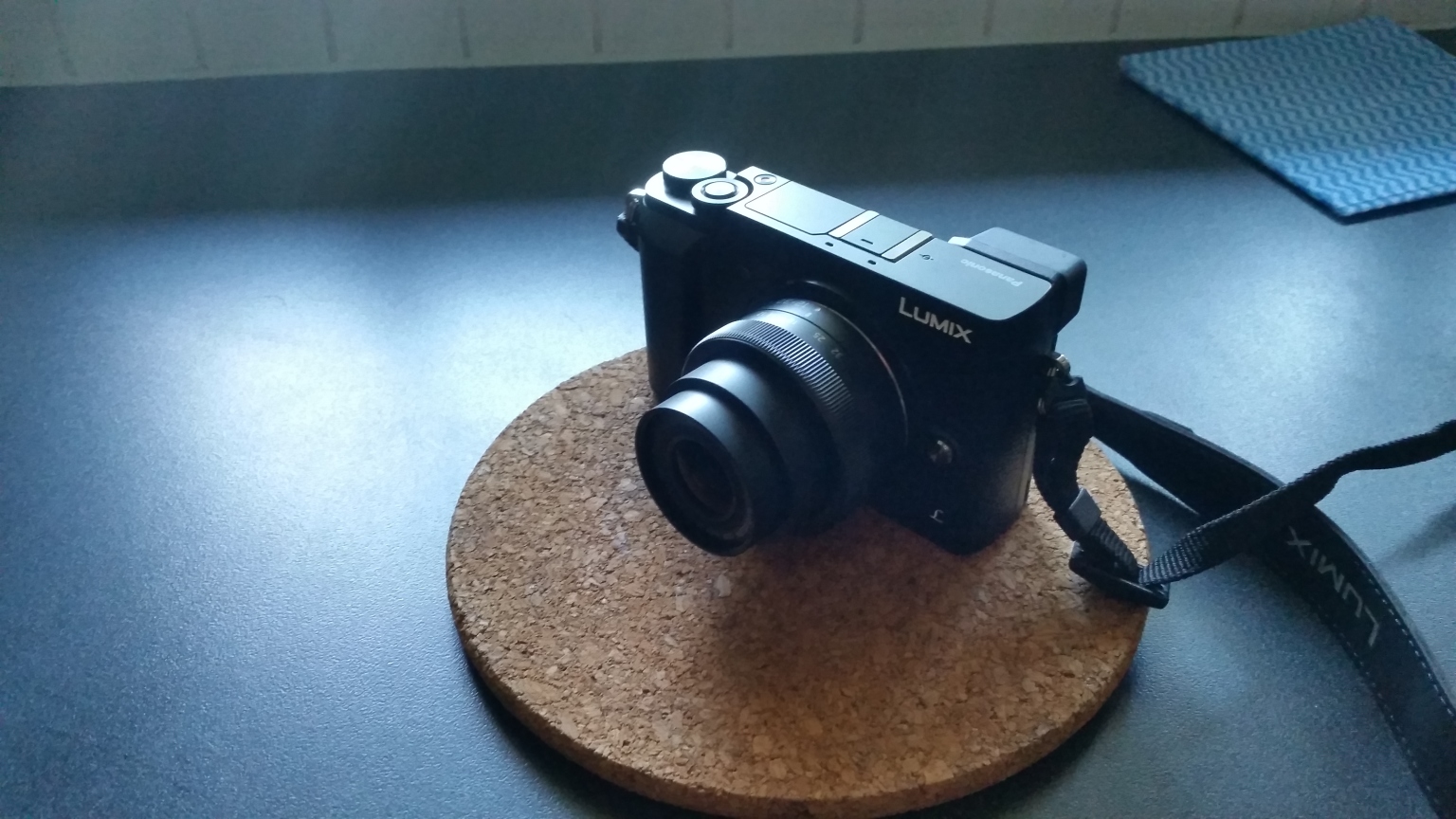
for my birthday i got a new(er) camera, a panasonic lumix dmc-gx85 with the standard kit
12-32mm lens; i hope that that upgrade gets me to produce More Better Pictures.
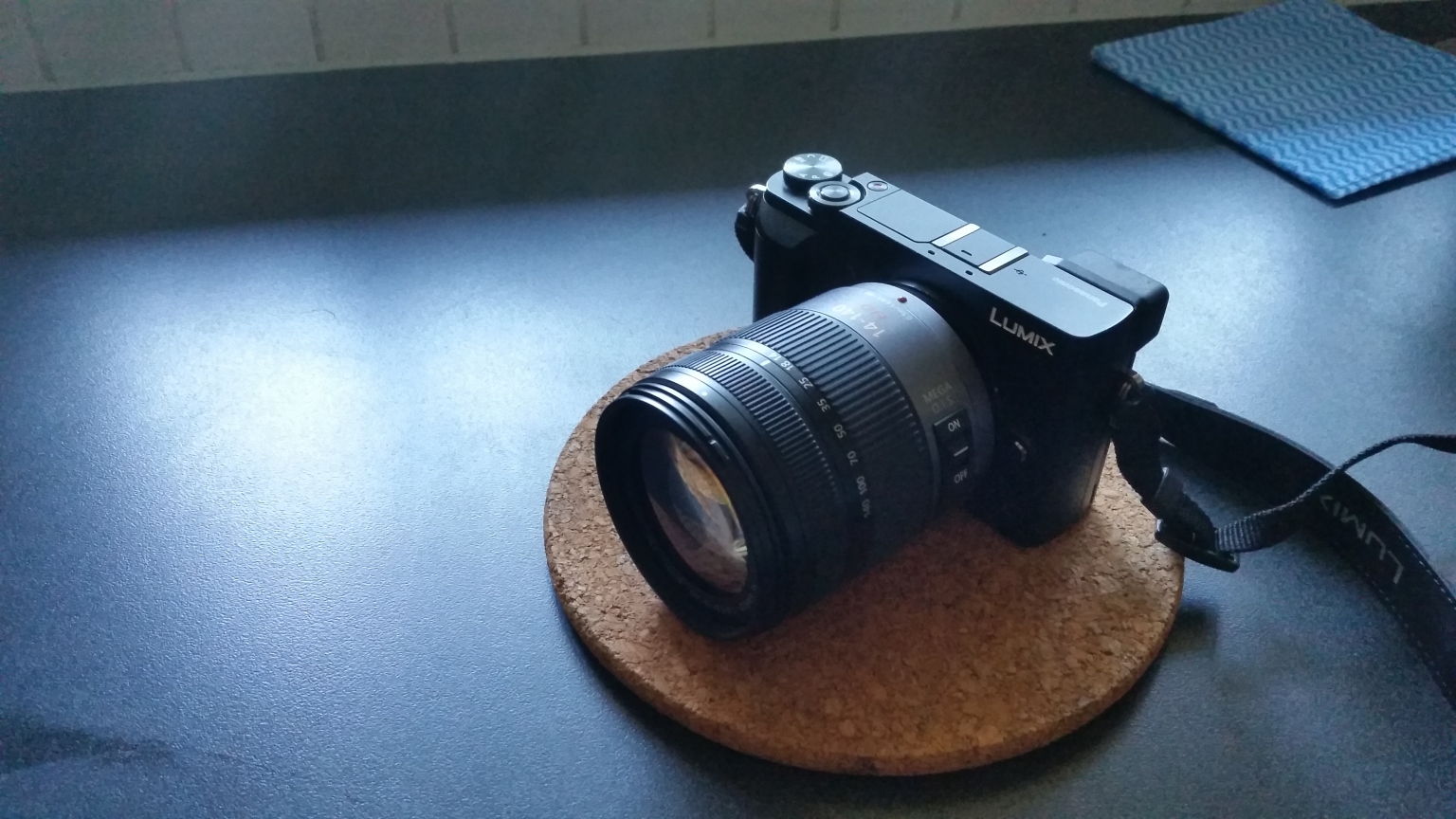
in the meantime i've also added a tele lens (14-140mm), which
reminds my sister of the aardvark in the pink panther cartoons when it is at the the maximum zoom.
[ published on Wed 24.07.2019 18:26
| filed in
interests
| tagged camera, elise
|
]
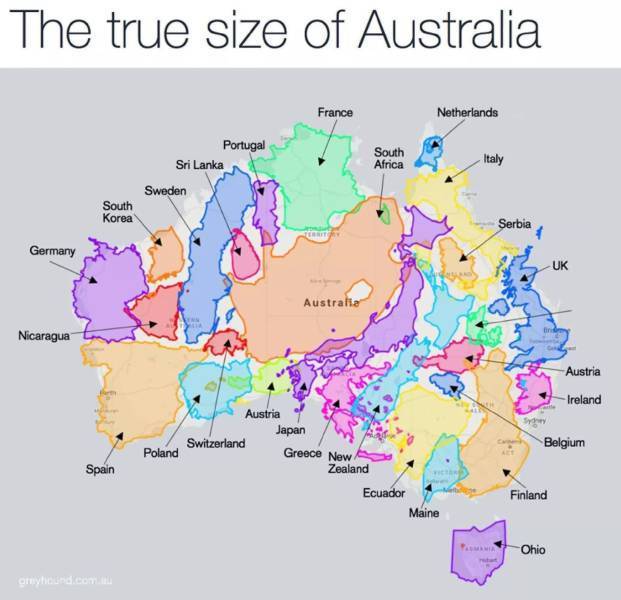
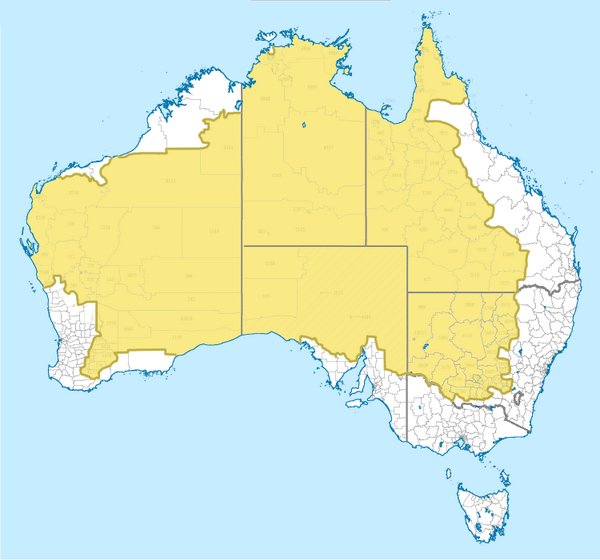
...is that there's lots of space.
we've got 25 million human inhabitants, but less than 500 000 live outside the
coastal areas (the yellow area on this map from amazing maps)
you don't have to drive very far inland to get away from everybody.
for somebody like me who can stand humanity in small doses only that's
a pretty good thing.
[ published on Sat 20.07.2019 10:22
| filed in
interests/au
| tagged oz, truesize, space
|
]
...you disregard the docs saying 'this requires at least two people' and you
figure out a hacky way to make it possibly all by your lonesome - even though
you do have a friend or two who could have helped you. *sigh*
click here for the rest of the story...
[ published on Wed 27.03.2019 16:37
| filed in
interests/tinkering
| tagged tinkering, loner, camping, car
|
]
for me A$970 paid for all of a three week, 4922km,
camping/hiking/sightseeing/road-trip south along the great dividing range.
2/3 of that went for 420l of diesel (my car is reasonably economical
even with the brake parachu^W^Wroof top tent in place), and the
remainder covered (national park and other) camping fees, some grocery
shopping and a few coffee and cake breaks.
i mostly camped in cheap or free places and somehow i can't bring
myself to eat out even when i'm on the road (at least when travelling
solo), which should explain the low cost.
i've long wanted to see more of australia. being off work right now
makes this the perfect opportunity to travel, except that the season
is not ideal for visiting central oz (late summer/early fall is both hot
and normally the rainy season); furthermore the current drought makes
the inland regions a bit less appealing than usual (ie. many creeks and rivers
are bone-dry, fire bans in many national parks and so on).
so i decided that i'd tag along the great dividing range towards the
south, visiting most of the higher areas on the way - for the views,
the hiking and a bit of cooler weather. the tentative plan also
included visiting the victorian alps and possibly the great ocean road
as well, but that part of the plan went up in smoke - lots of nasty
bushfires in victoria, pretty much exactly where i wanted to go - so
the eventual southernmost goal shifted to mt. kosciuszko, the highest
hill in oz.
here is the whole trip as a single track;
read on for photos and more details.
click here for the rest of the story...
[ published on Sun 31.03.2019 14:38
| filed in
interests/au
| tagged camping, hiking, travel
|
]
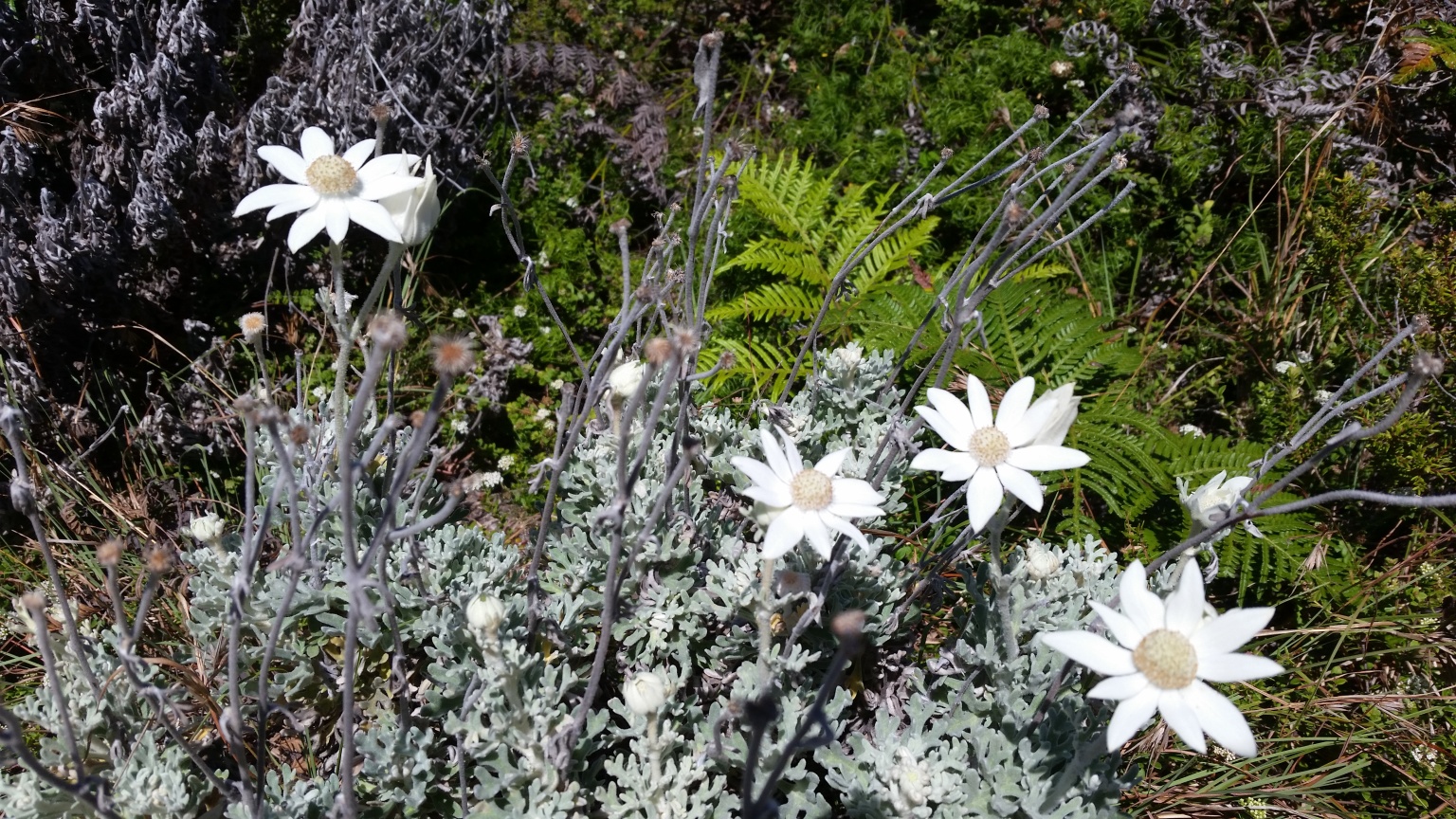
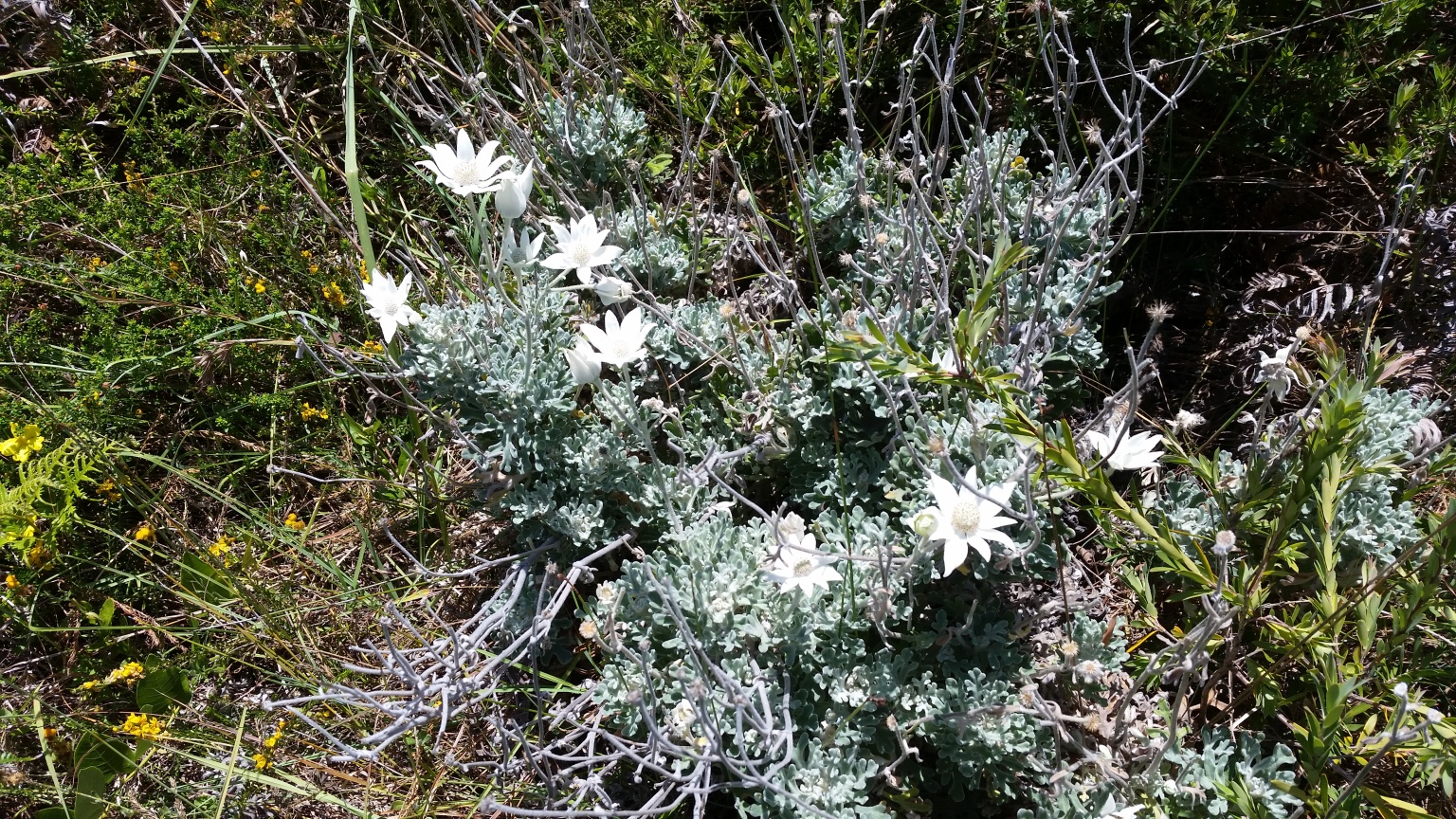
well, this is australia so it's not
edelweiß but
flannel flowers. the
leaves have exactly the same texture though! these were observed at
yuraygir national park, on a hilly headland maybe 500m from the beach.
as you might tell from this i've been camping a bit; read on for some more
photos and a bit of a report.
click here for the rest of the story...
[ published on Wed 23.01.2019 14:35
| filed in
interests/au
| tagged camping
|
]
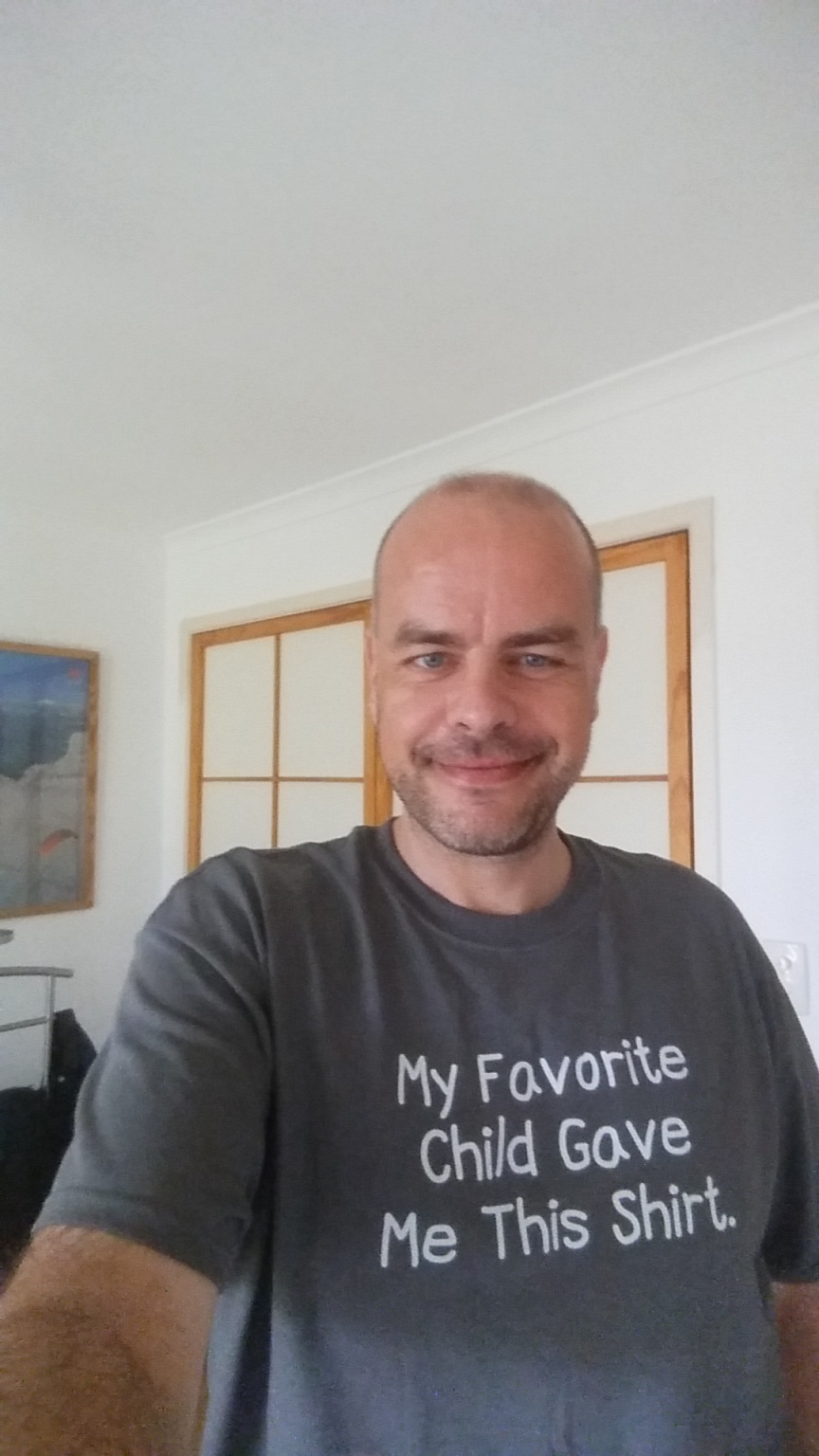
not the least because conny gives me these cool gifts, like she did
this christmas: a whole box of well-selected shirts from roadkill. most are even wearable in polite company :-)
[ published on Wed 23.01.2019 12:12
| filed in
interests/humour
|
]
today i did a little time travel (a 15 min drive across the border to
NSW, where the
timing sucks but
the alcohol licensing
apparently doesn't),
and bought austrian beer at aldi:
it's quite obvious that australian beer prices are mostly driven by
very high taxation, when aldi can make a profit selling the far
travelled egger märzen not that much dearer than local(-ish) beer: the
egger goes for $5 per litre, whereas aldi's nice kiwi low-carb goes for
$4.42 per litre (that's aldi prices, the other booze 'discounters' are
nowhere near except for headache generators like xxxx gold...).
[ published on Wed 12.12.2018 18:25
| filed in
interests/au
| tagged beer, taxes, egger, austrian_beer
|
]
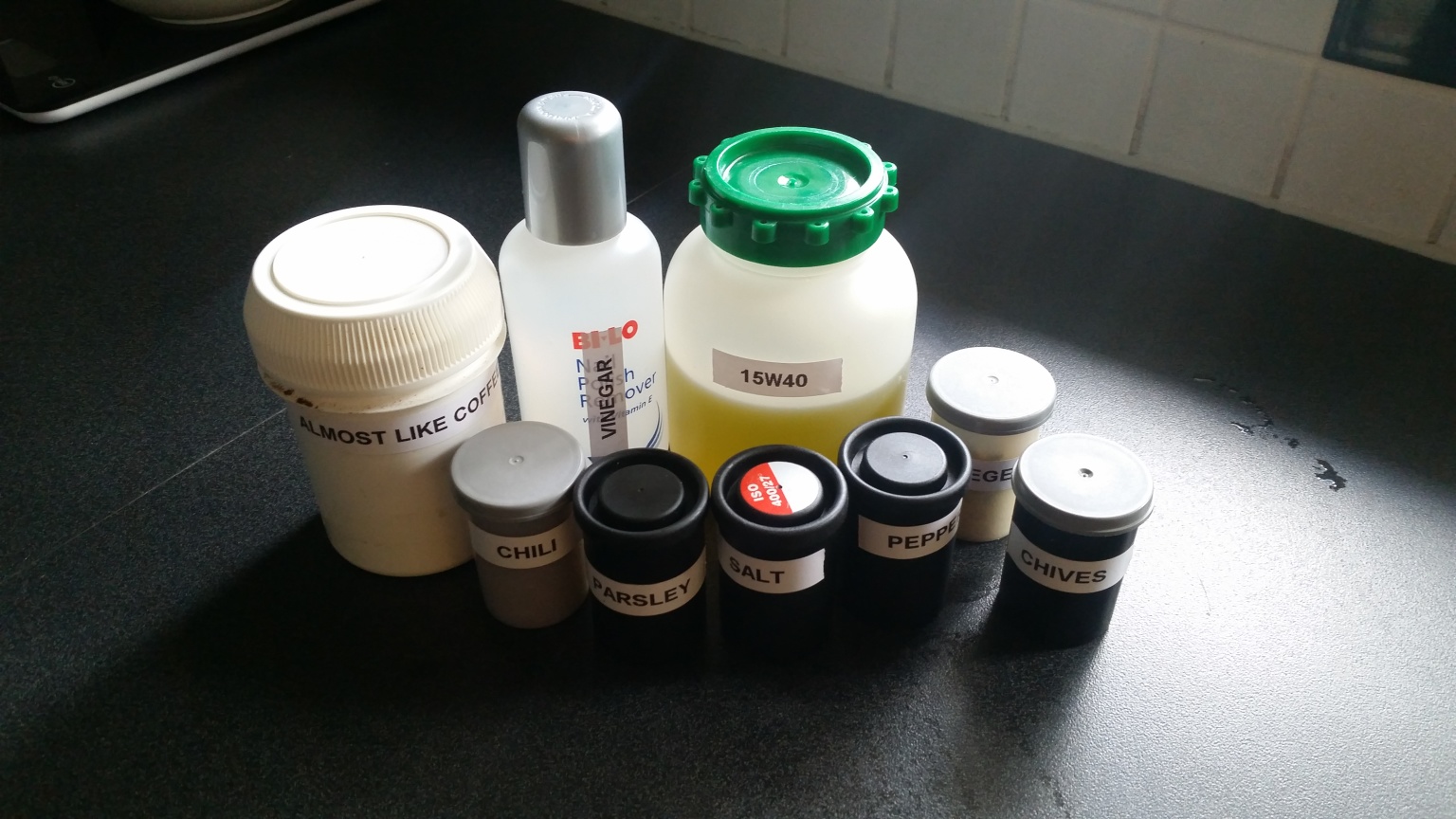
...but i find that 15w40 and nail polish remover goes really well with my salad.
i'm going camping tomorrow, and i like reusing containers (well-cleaned
containers...). obviously i also like making silly labels with my label maker.
[ published on Thu 29.11.2018 17:30
| filed in
interests/humour
|
]
after reading my recent post about my new car
one of my austrian friends asked for more details; not exactly surprising
as utes like that are not exactly common in austria.
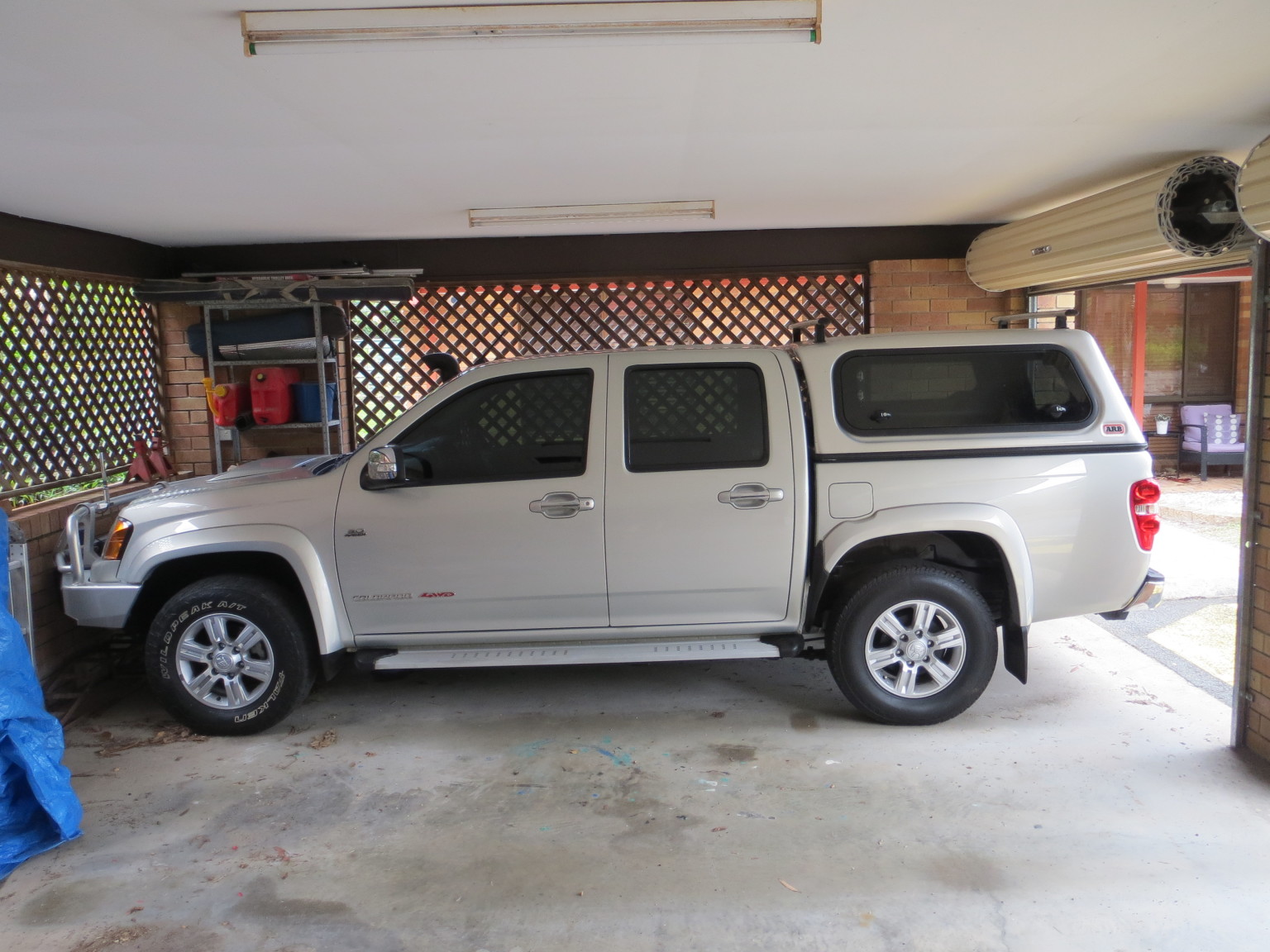
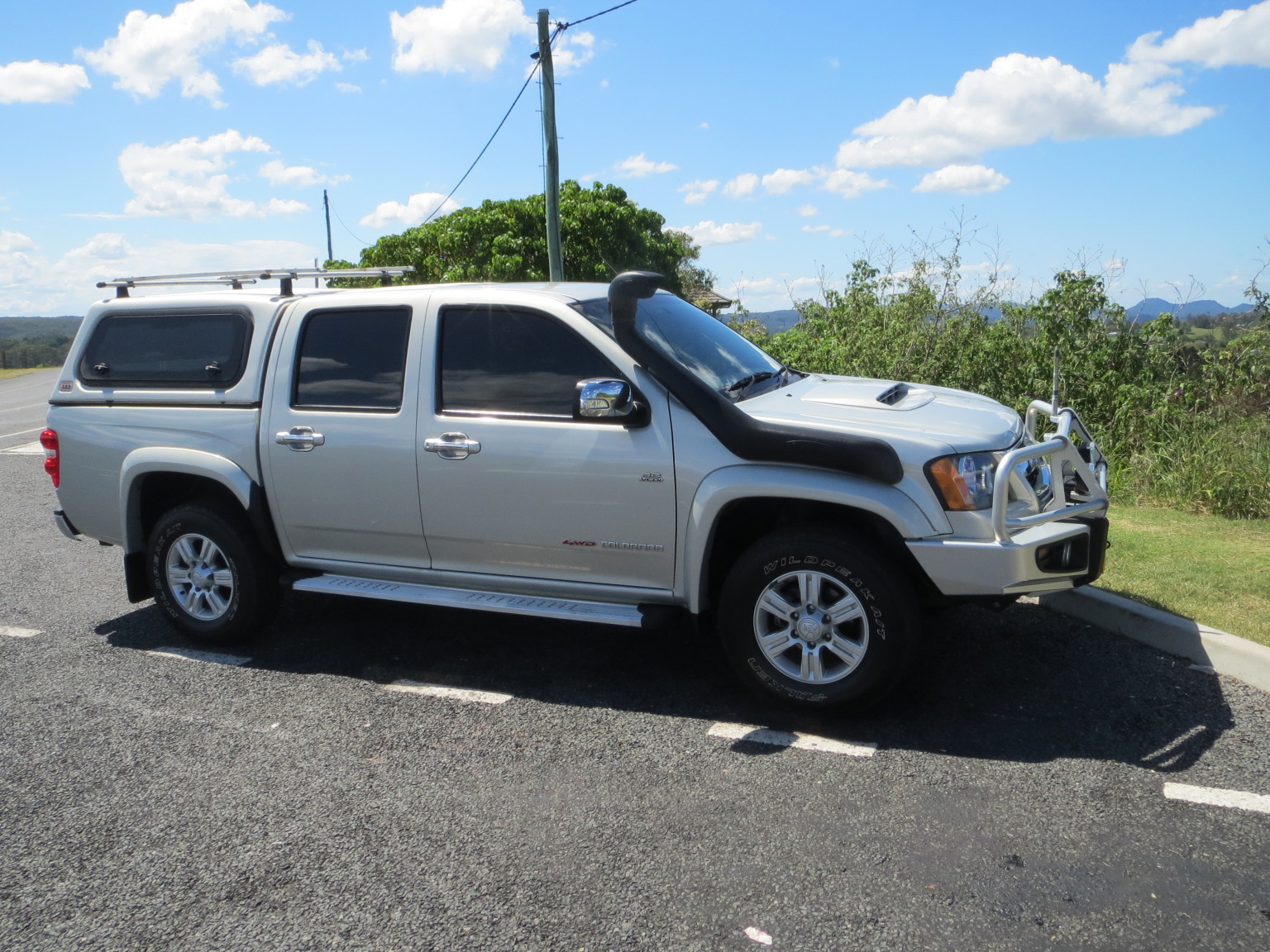
so here are some more photos and phacts.
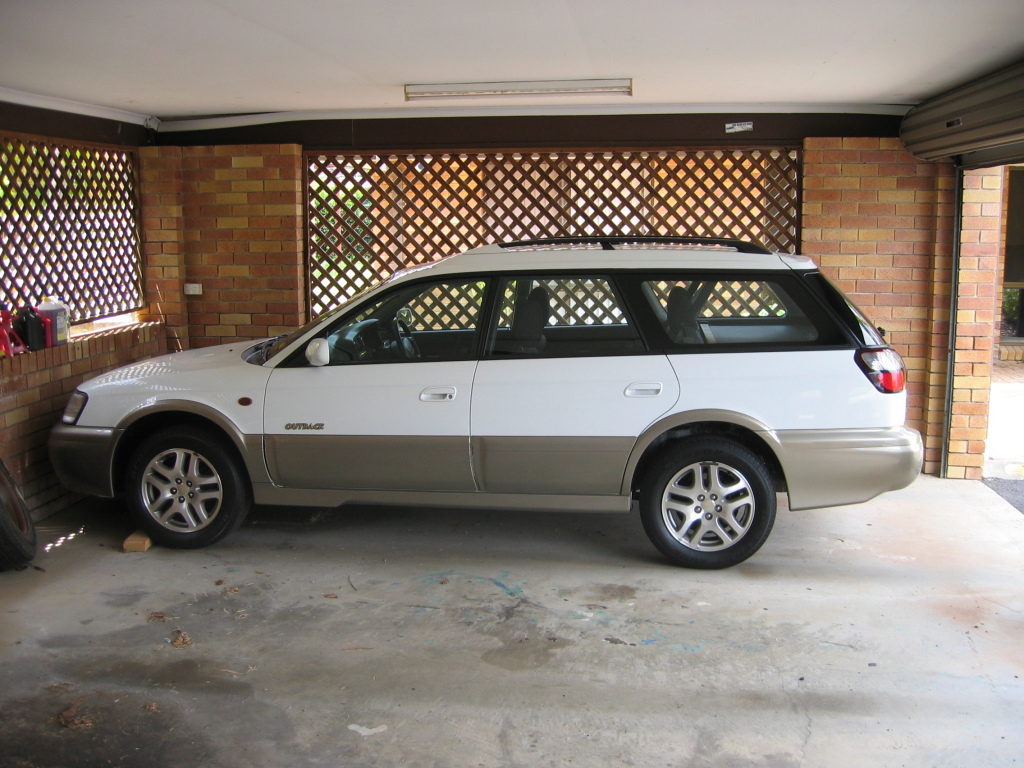
for comparison here is a photo of my old subaru outback, an average
length station wagon ('kombi').
the colorado just fits into the garage, ie. iff i drive up to
and carefully bump into the wall. stock length is 4.9m, add
about 25cm for the bull bar on mine.
stock weight is about 1920 kg (cf. 1460 kg for my previous car, a forester),
but this one lugs around a bull bar, winch, canopy and dual battery;
installing a lift kit is very much in planning.
it's got about 120 kW and lots of torque thanks to the turbocharged
diesel; agility is...well, this is not a race car. it doesn't feel
underpowered but there's the inertia of 2 tons of car.
[ published on Mon 26.11.2018 13:18
| filed in
interests/au
| tagged toy_car, 4wd, chick_magnet
|
]
(as in sewing, not faecal matter)
believe it or not, but i do actually own a sewing machine - and i can even
operate it (if not exactly well).
it's a relatively old elnita 150, and the only electric bits in it are
the motor and the light bulb. i do admire the mechanical design of
mechanical sewing machines: two cam drums, a comb full of cam
followers, a few levers, a bunch of springs. in this machine that's enough
for 15 different stitch patterns.
however, mine doesn't get used often. today i wanted to prep it for
some upcoming fiddly fabric work, only to find out that it would only
zig spastically, not zig and zag.
after applying occam's razor to isolate the involved ziggy bits it
turned out that the issue was just stiffened old grease and/or
insufficient lubrication: one follower lever had gotten too sticky to
return properly when released. for zig that one gets pushed but for zag it
needs to return under spring tension, which it didn't do reliably.
the solution was trivial; a bit of fresh light oil, some soaking
time and vigorous exercise of the mechanism and it's all working
again. me happy :-)
[ published on Mon 26.11.2018 12:36
| filed in
interests
|
]
following up on an earlier post,
here are a few more reasons why 3d printers are both cool toys and
useful tools.
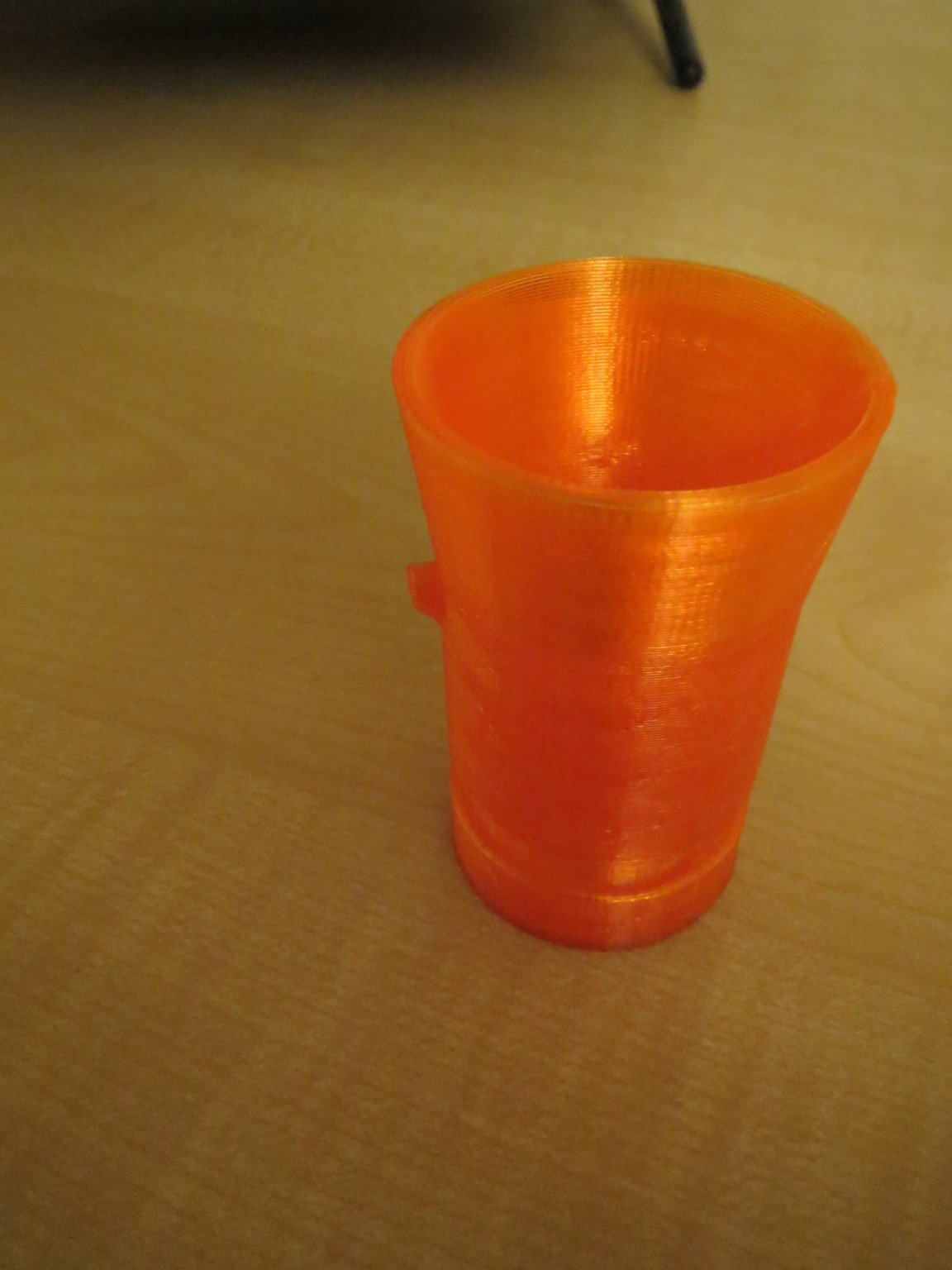
i live in a pretty humid climate, and using vacuum storage bags (for
things like spare blankets and pillows) is quite important; but the
dyson vacuum that i inherited from my daughter has this
nice-but-unhelpful clicky connector that sucks because it doesn't
suck -- there's no flat interface that you can press against the bag valve.
so i spent a little time on designing and printing a sucker adapter
(in PETG because i wanted to do more testing with the material).
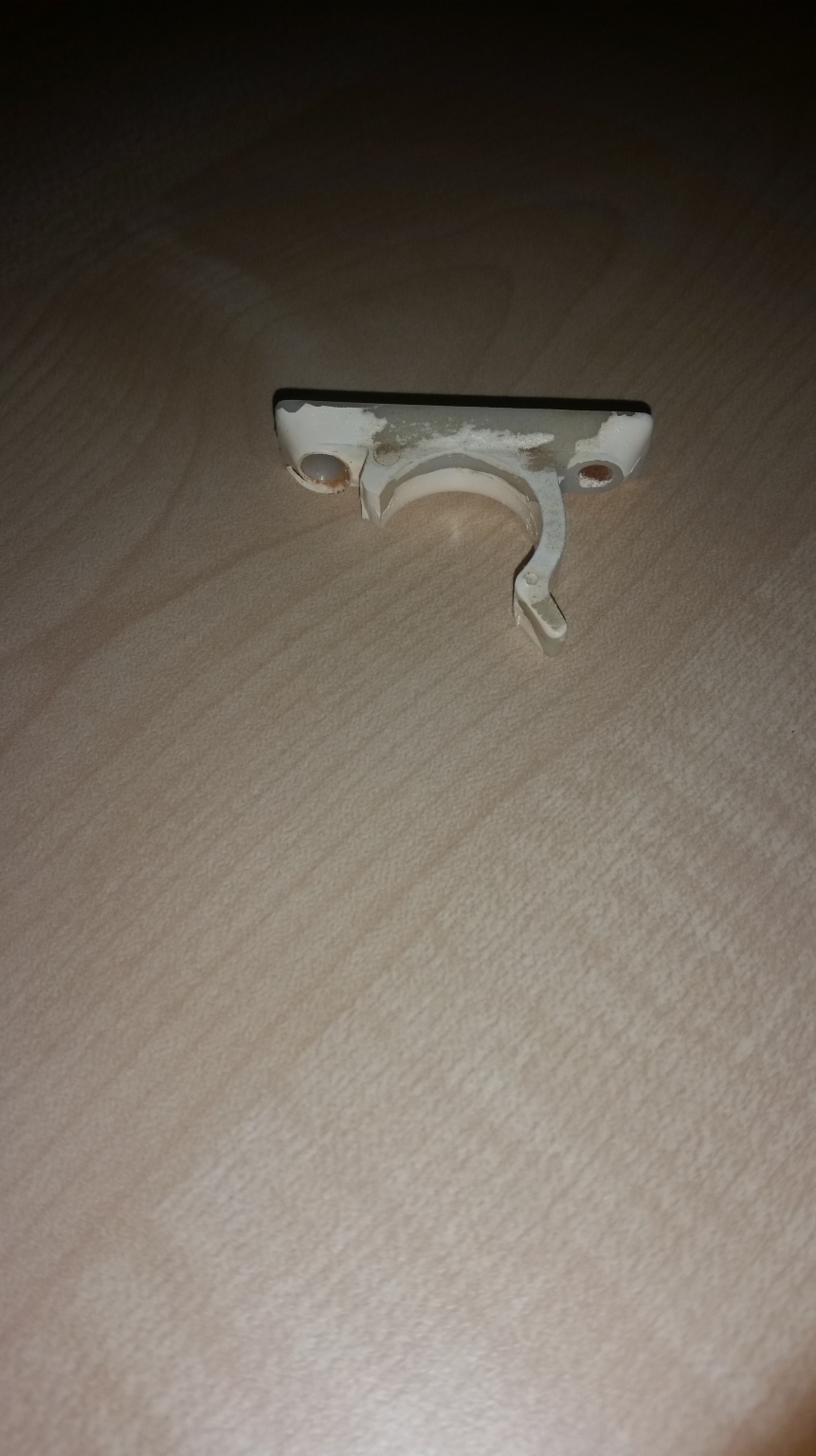
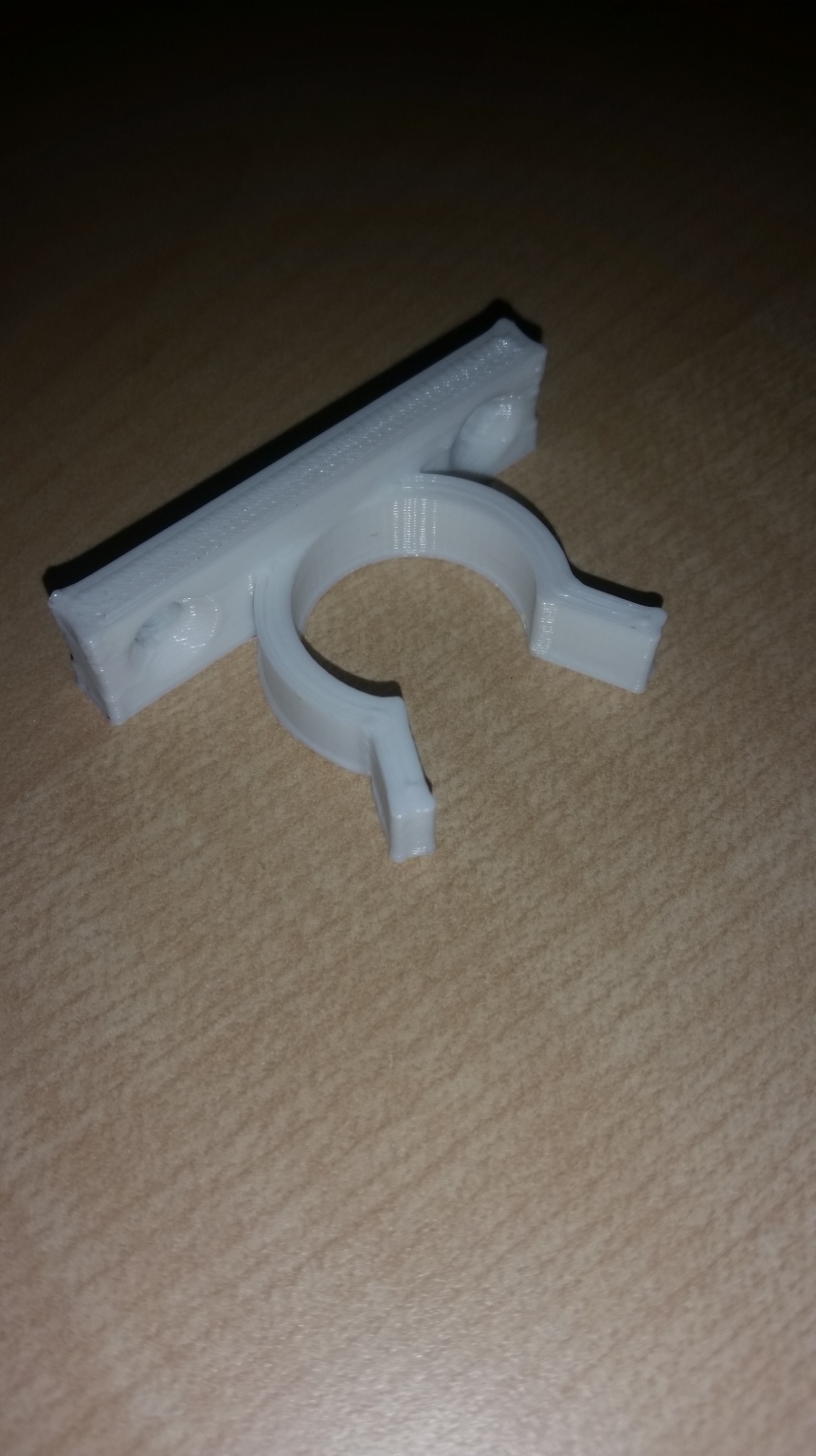
or this one, from earlier this week: the built-in cupboard in my
hallway has a broken door catch (cylindrical post in the frame,
claspy catch on the door) and i couldn't find any even remotely
similar replacement at the (sole remaining :-( ) hardware chain.
however, calipers and persistence and one failed test-print later i've
now got a parametric model and an actual replacement part that works.
on the last photo you can see my newest mod to my printer, a mk52 (clone)
magnetic heatbed. the print surface is PEI on a removable sheet of spring steel,
which is held to the actual bed and heater by many strong magnets. when your
print is done you take off the steel sheet and flex that, rather than prodding
and prying with spatula/chisel/knife.
so far it works pretty well, but the bed is made from PCB/fibreglass and
prone to warping. i haven't fully bolted the bed down (like official prusa
does it) because i like the ability to level things manually, but i
may want to change that later; for now i've setup 7x7 grid level compensation
with my smoothieboard clone and that takes care of the imperfect flatness.
[ published on Fri 09.11.2018 16:18
| filed in
interests/tinkering
| tagged 3dprinter, openscad, tinkering, smoothieboard
|
]
i'm now driving what might conceivably be called a chick magnet car
-- with the understanding that the magnetic attraction is confined to within
the cabin, and the repelling forces work all over the outside. net
result: it'll take a woman of superhuman persistence to actually come close...
click here for the rest of the story...
[ published on Fri 09.11.2018 15:43
| filed in
interests/au
| tagged chick_magnet, toy_car, 4wd
|
]
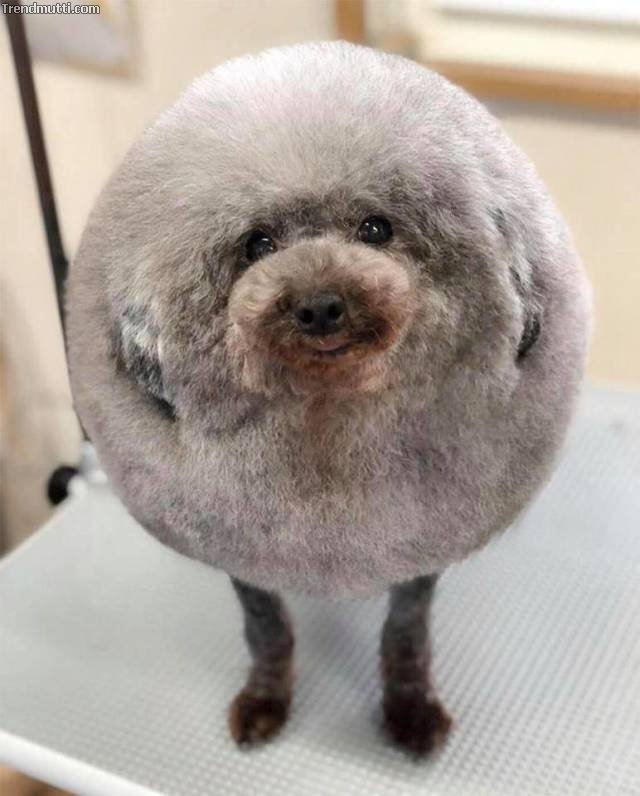
...except that one is not a homeomorphism but rather an example of
subtractive manufacturing.
[ published on Sat 06.10.2018 15:05
| filed in
interests/humour
| tagged kugelrund, kugelhund
|
]
i must say they look very unimpressed with whatever human caretaker that
had this attack of the math hahas.
[ published on Thu 04.10.2018 18:22
| filed in
interests/humour
| tagged cats, boxes, math
|
]
i have lots of reasons!
click here for the rest of the story...
[ published on Sat 08.09.2018 20:54
| filed in
interests/tinkering
| tagged 3dprinter, openscad
|
]
source: the always awesome pearls before swine
[ published on Mon 03.09.2018 08:19
| filed in
interests/anti
|
]
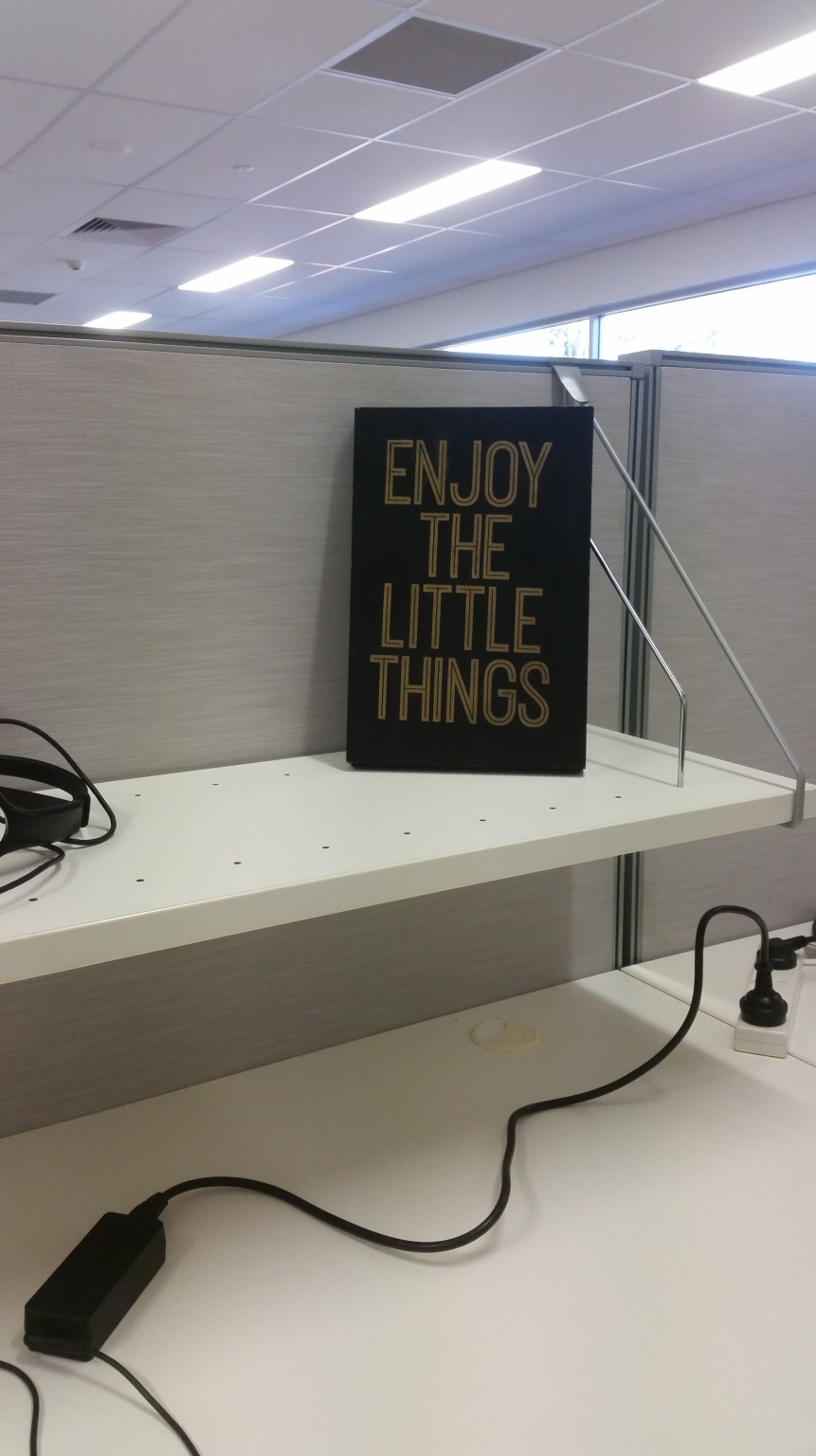
last week my colleagues plastered my desk area with
all kinds of motivational thingies. lots of grins when i came in next morning;
they simply know me too well.
i spread the enshrined good vibes back out across the office and kept
only this one, because it reminds me of a hiliarious movie that i enjoy
a lot (zombieland)
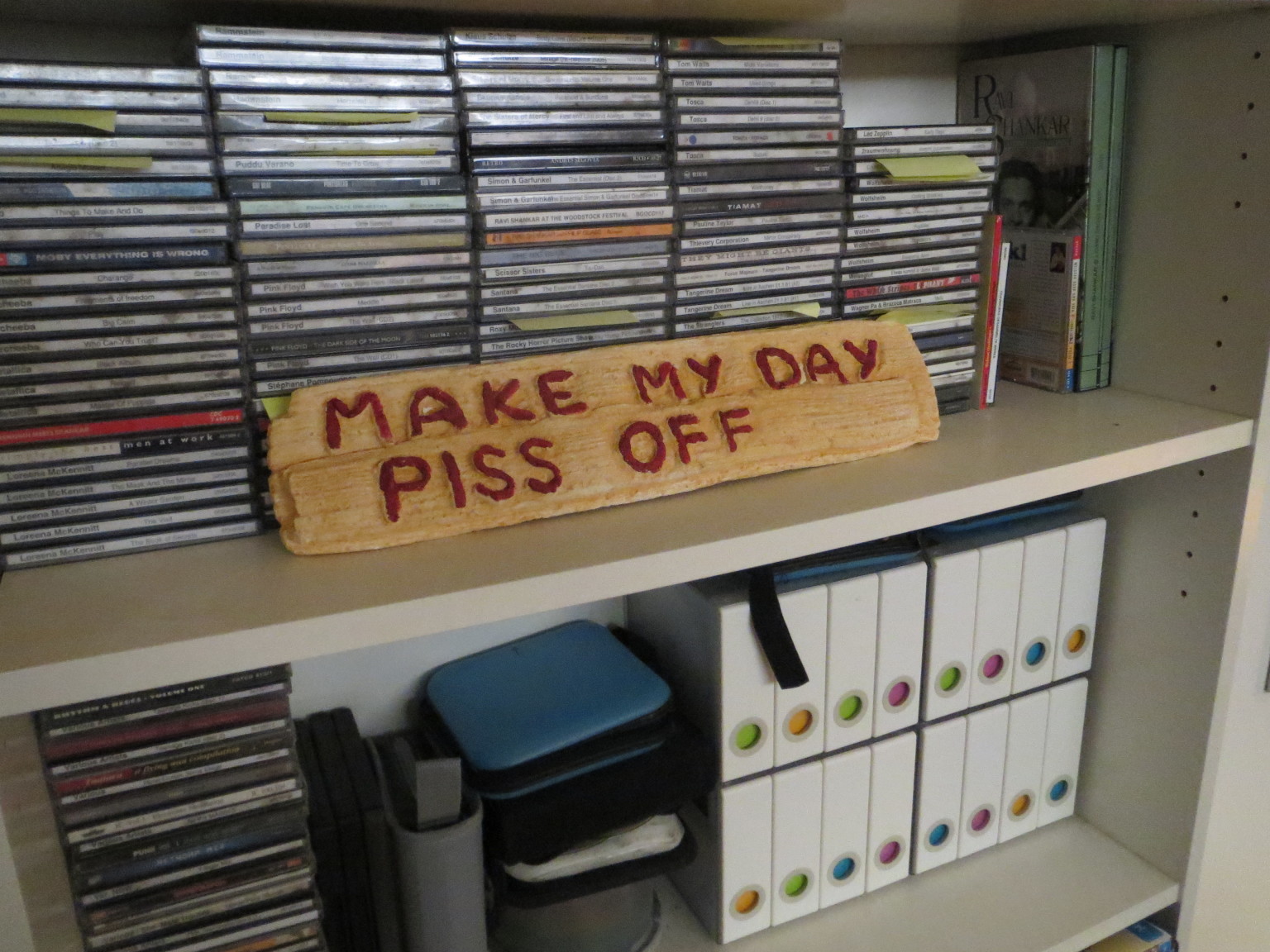
a few years back my exwife brought me this gift on one of her periodic visits,
also grinning quite a bit. she definitely knows me too well.
the clunky thing is now parked in my living room in a place of honou^Whigh
visibility (directly in your line of sight when the entrance door is
open). does it repel god botherers and scamsters? dunno; they rarely get
to the point of an open door with me.
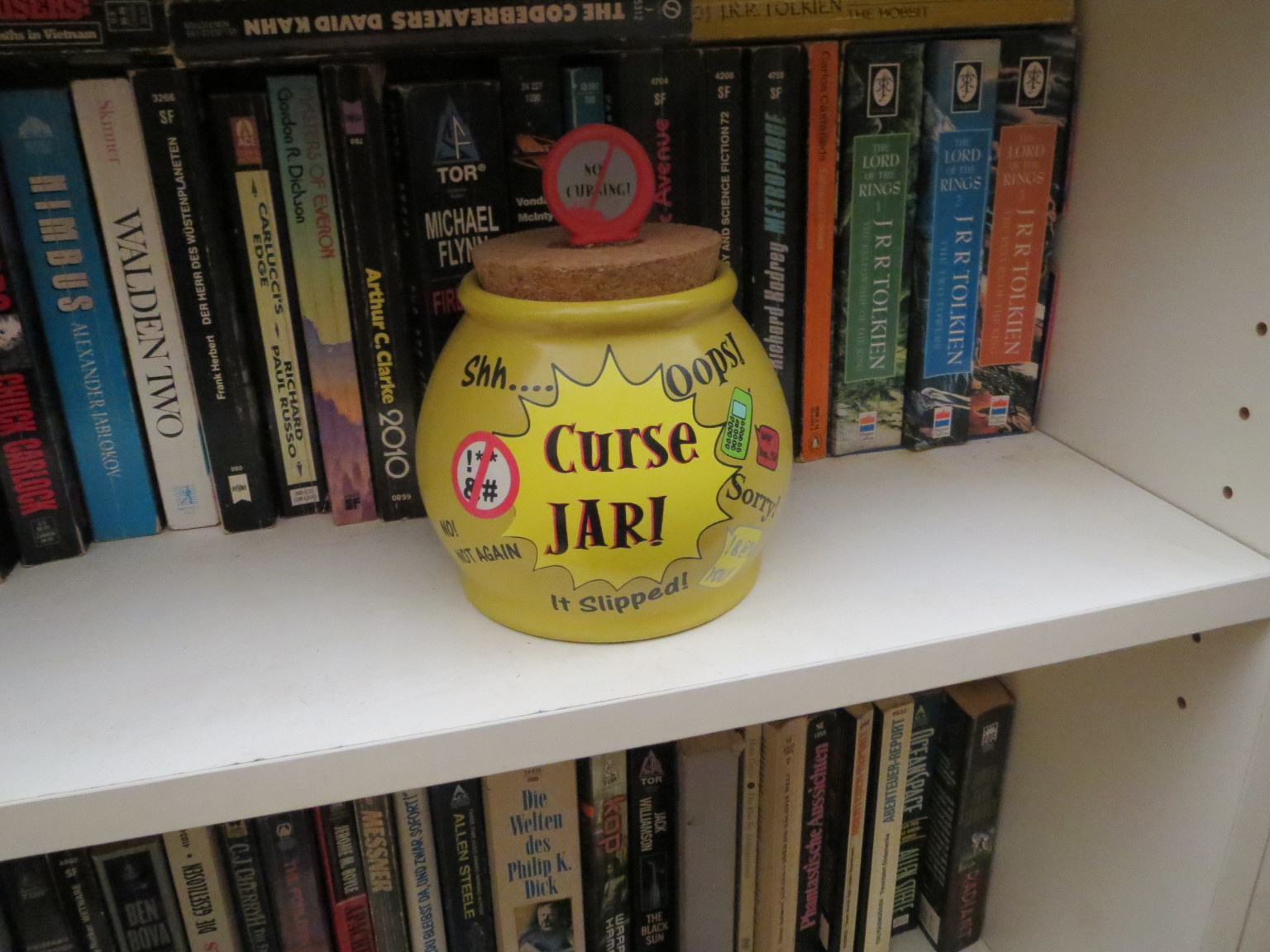
a further few years back my daughter gave me this gift. she clearly
also knows me very well.
it's what i use for collecting spare change, but unconditionally: i
do swear at misbehaving machines, dud technology, lousy situations and
general stupidity, in order to stay somewhat sane. i refuse to pay for
that :-)
now, what - if anything - might those gifts tell you about me?
[ published on Wed 22.08.2018 18:58
| filed in
interests/humour
| tagged lostintranslation, giftthatkeepsongiving
|
]
you might find this useful if you've got a 3d printer
or cnc setup with an mks sbase board (a cheap smoothieboard clone), and if
you want to add one of the typical cheap "LJ" inductive probes (for
levelling, homing, whatever).
click here for the rest of the story...
[ published on Tue 19.06.2018 17:52
| filed in
interests/tinkering
| tagged 3dprinting, smoothieboard, mks-sbase, electronics, lj18a3, lj12a3
|
]
...you have a trashy little toaster and two slices of bread
that don't quite fit, and you're considering the orientation and the general
topology of the bread so as to get the maximum even browning of the slices.
[ published on Sat 26.05.2018 15:05
| filed in
interests/humour
|
]
i don't watch much tv. never have, likely never will. ("not much"
is no more than half an hour a month.)
i definitely watch no live tv at all as that amounts to cruel
and unusual punishment; instead i use my fairly old twin-tuner
topfield disk recorder which does time-shift pretty well.
click here for the rest of the story...
[ published on Sat 10.03.2018 12:16
| filed in
interests/au
|
]
i've had a local SSL CA for my own porpoises for years, and this site
did in fact provide https access with those non-globally-trusted
certificates for a while now.
i haven't advertised this at all because subjecting every one of my
few visitors to a 'warning - untrusted ca, dangerous connection, it's
for the security!!!!' kind of crap experience is not my aim.
in the meantime let's encrypt has appeared
on the scene, and it works sortakinda well - about as well as can be
expected with the utterly untrustworthy 'trust' design that is X.509.
click here for the rest of the story...
[ published on Sun 04.03.2018 12:52
| filed in
interests/crypto
|
]
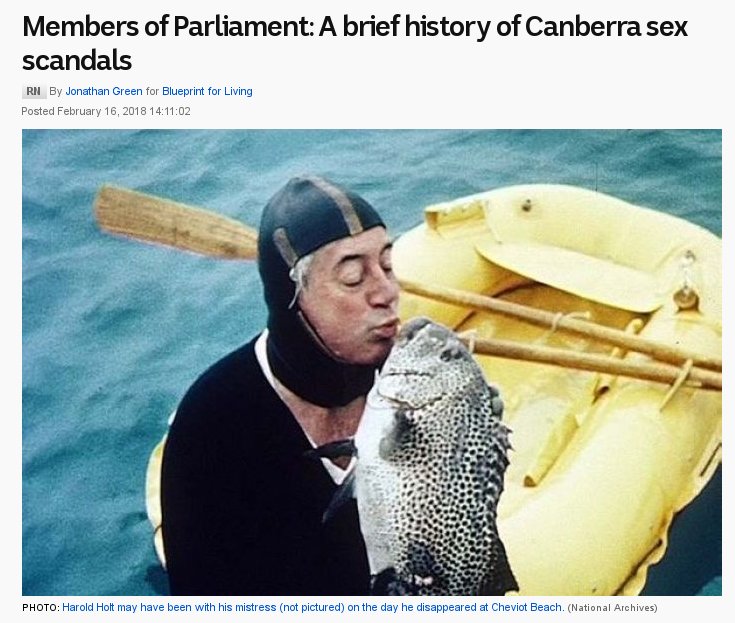
i had to laugh when i saw the caption for the top photo
on this current news story about politicians having sex: harold holt, curiously misplaced prime minister, and his fishy "mistress
(not pictured)".
[ published on Fri 16.02.2018 15:23
| filed in
interests/au
|
]
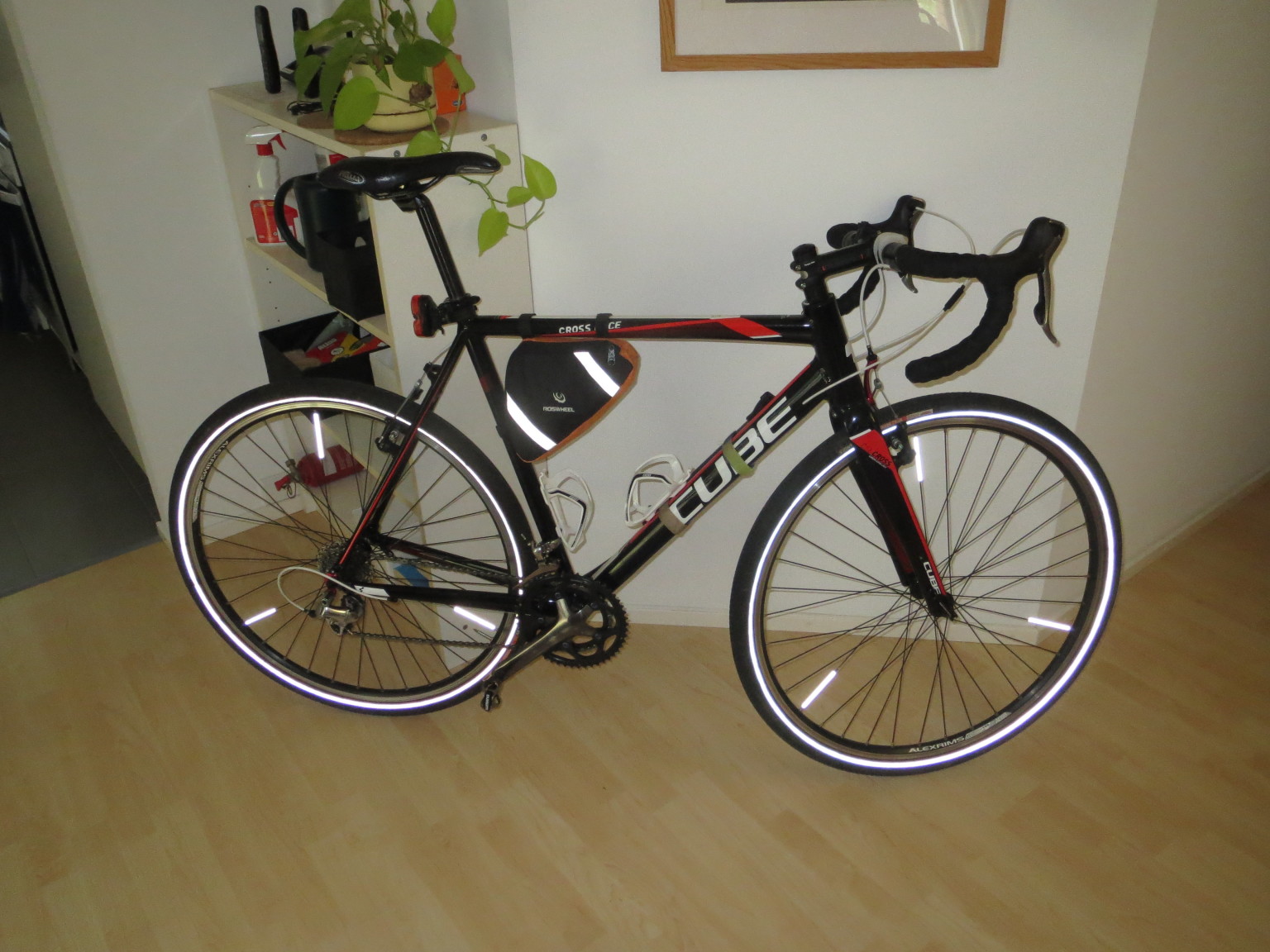
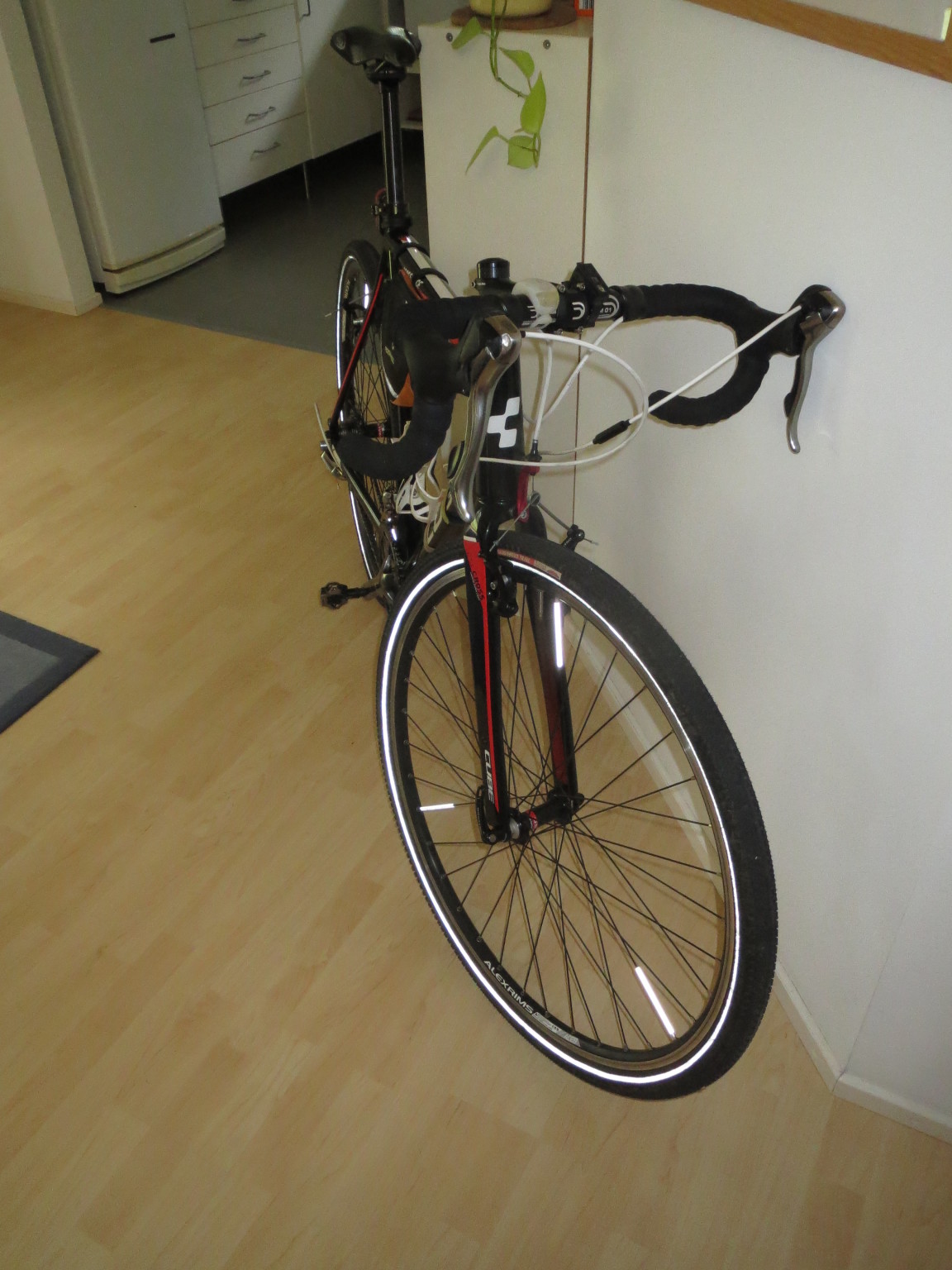
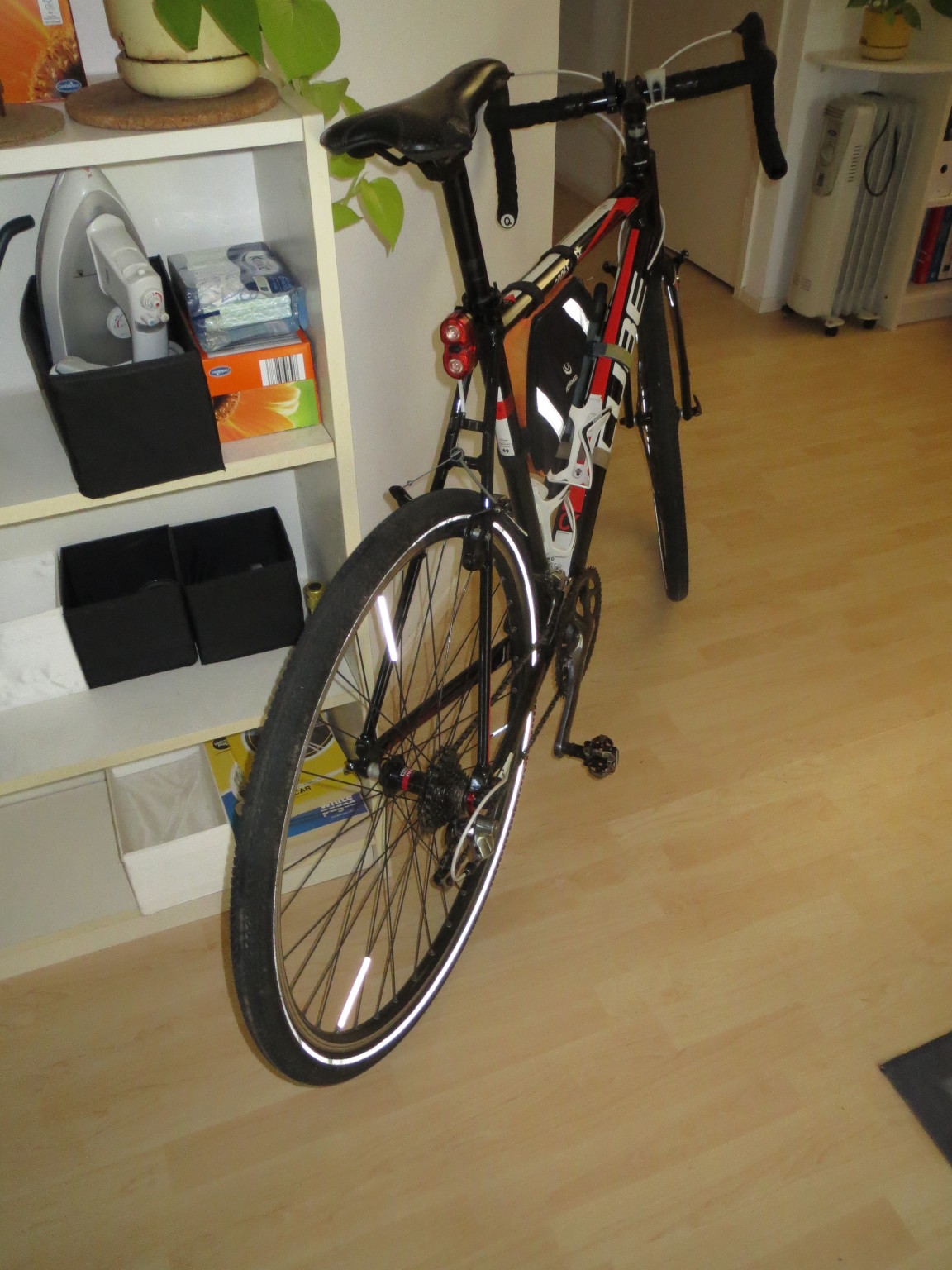
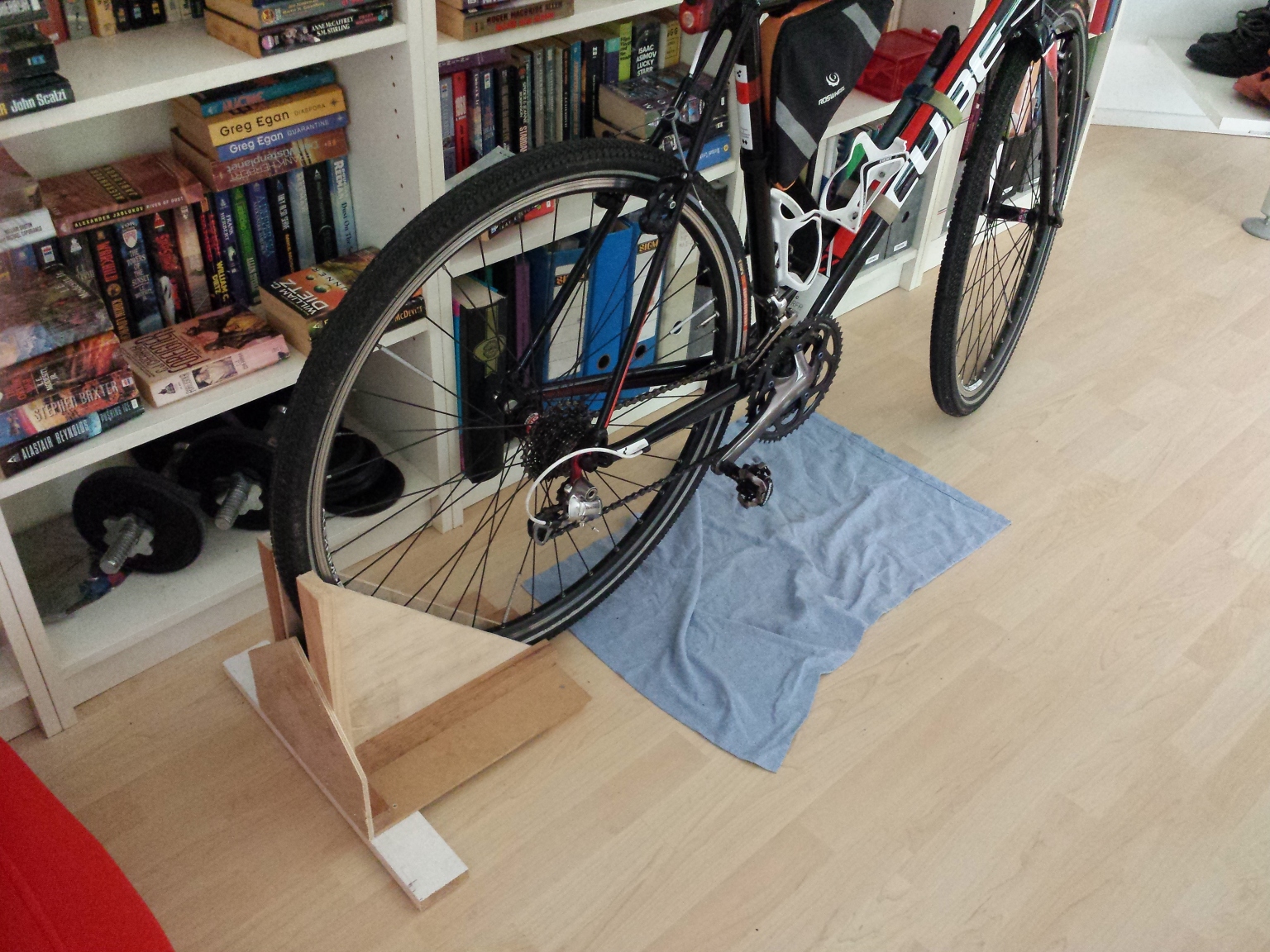
i've got a new toy. it's a cube. no, it's a cross.
no, it's a re-cycle - it's new-to-me. it's also a bi-cycle.
my boss had an older cube cx cyclocross bicycle with pretty nice
components for sale, and i decided (with a little help) that
i should get myself something nice every
now and then even though i technically don't need
it (because my old mtb
is still running fine; i've had that since 2010 and it was about 4-8
years old even then).
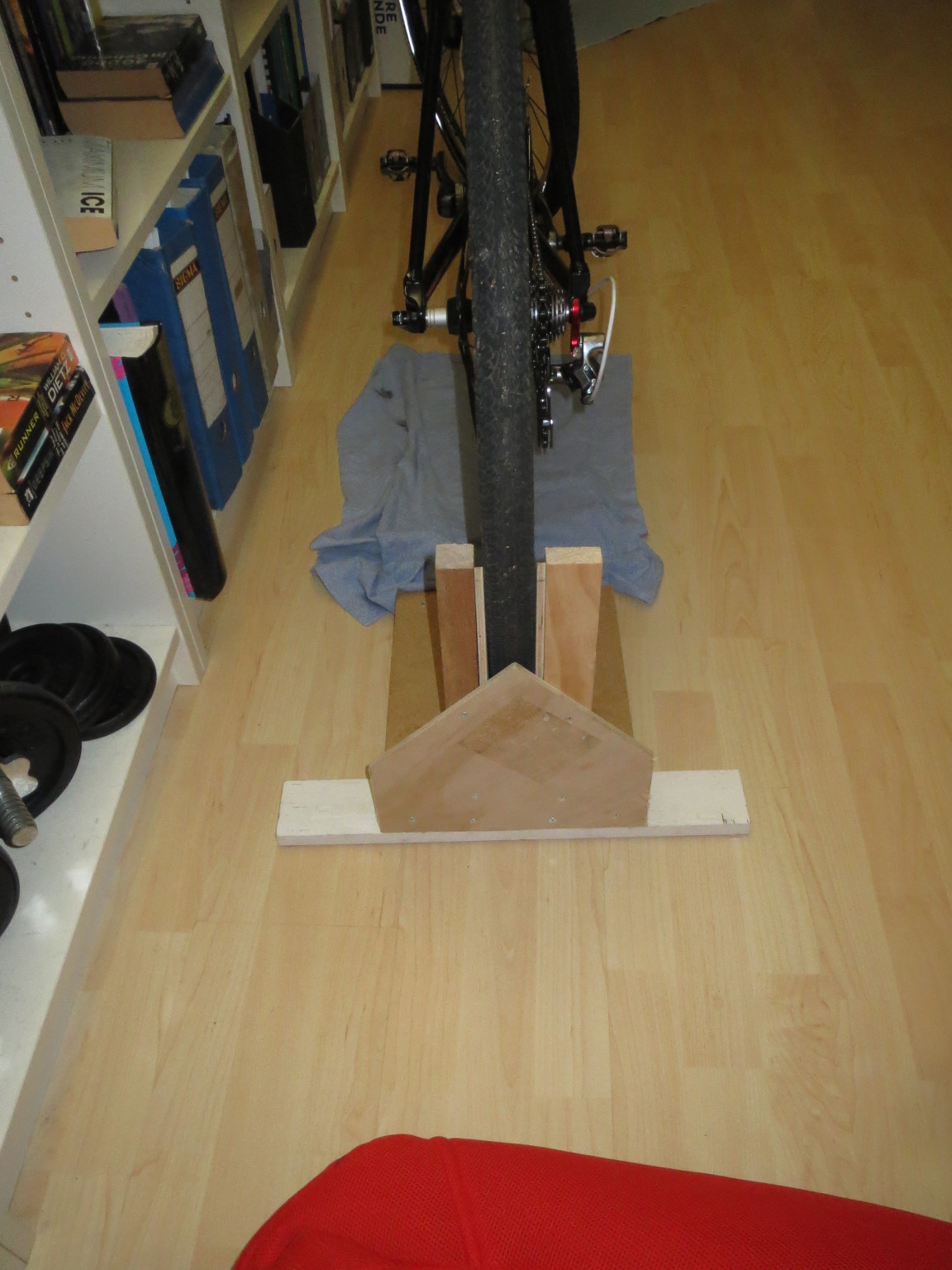
and because that bike is a bit too nice to leave outside
it needs a stand.
a bit of scrap wood, some screws and some time with speed square
and circular saw later and we have an upcycled stand. tadaa. ugly but works.
[ published on Thu 25.01.2018 17:19
| filed in
interests
|
]
newer...
older...