
Rob gave me a 1GB clonepod. Its Chinese designers made a number of...questionable design decisions, and as a result the player was somewhat broken when I got it.
Broken bits do not necessarily deter me. In this instance, the player had been gifted with a nonstandard tiny usb plug/socket, which naturally broke apart. Here's the recipe for my fix.
- a multimeter, alligator clips and a needle
- fine-tipped soldering gear, some desoldering braid
- two cdrom-audio cables
- a length of ribbon cable, 4+ strand
- a bit of breadboard
- four jumper pins or a bit of terminal strip
- superglue and a bit of epoxy
The first step obviously is to salvage...information, that is: with the multimeter and the needle I figured out the pin correspondences between usb plug and the proprietary plug and down into the player guts.
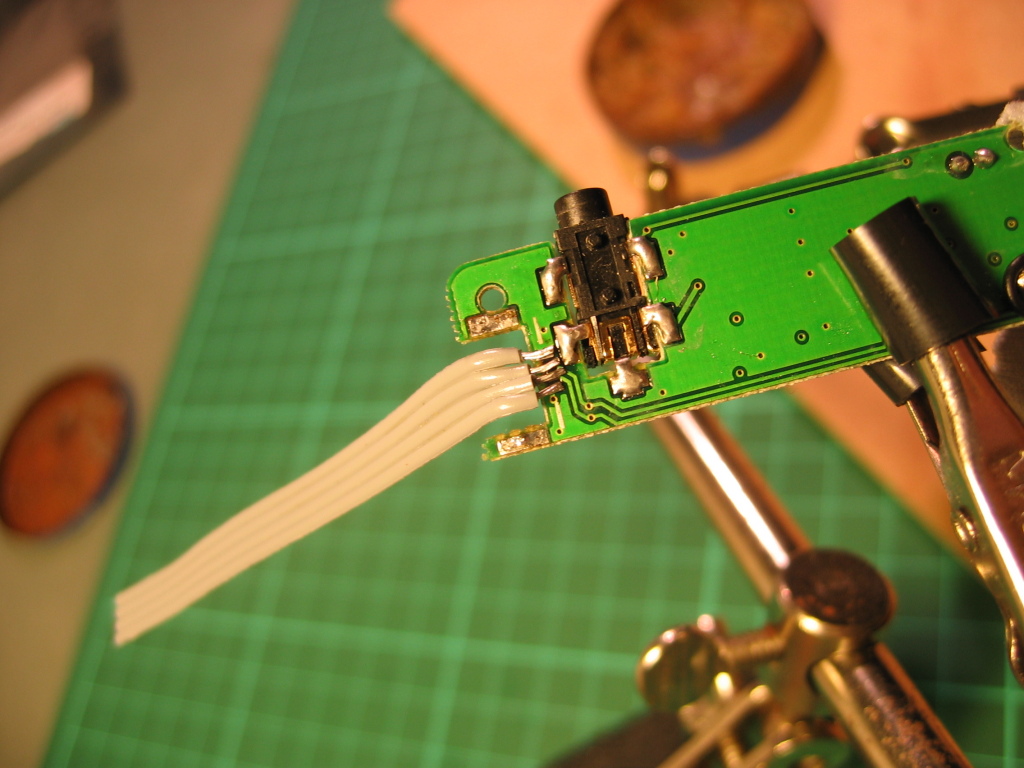
Having established that I desoldered the broken socket. And soldered in the short strip of ribbon cable. The four "fat cables" in the photo are each 1.2mm wide...
Next I ripped two four-pin connectors off the cdrom audio cables, carefully pulled the contacts out (two cables were sacrificed because usually only three pins are connected but I need four connections for usb).
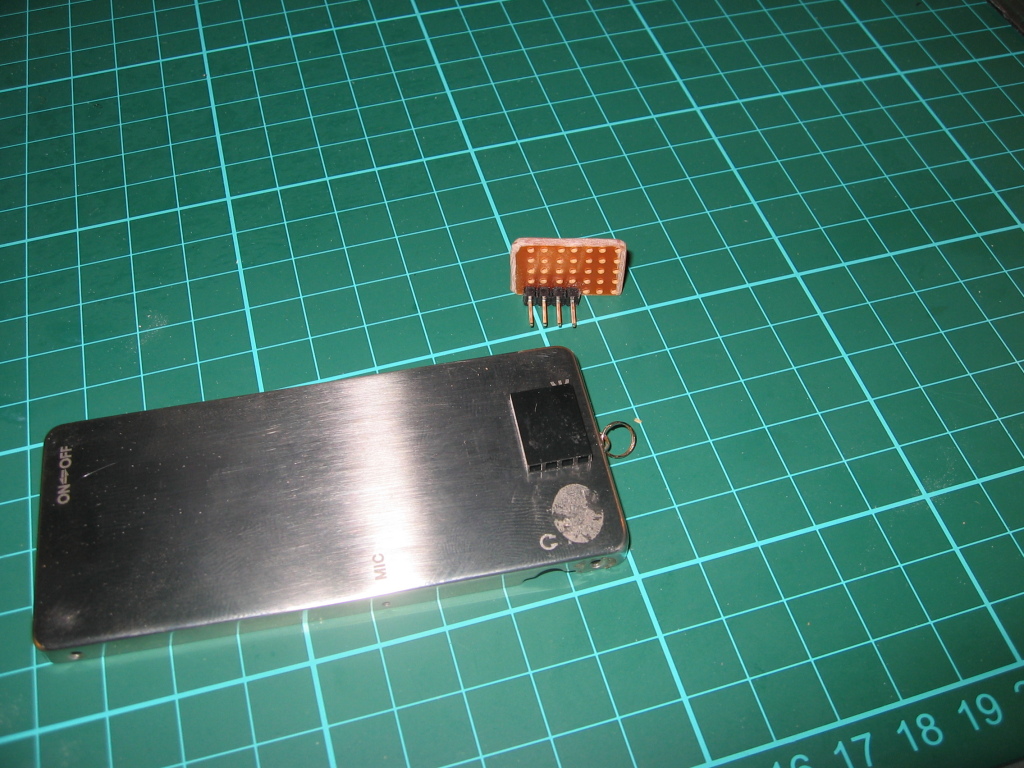
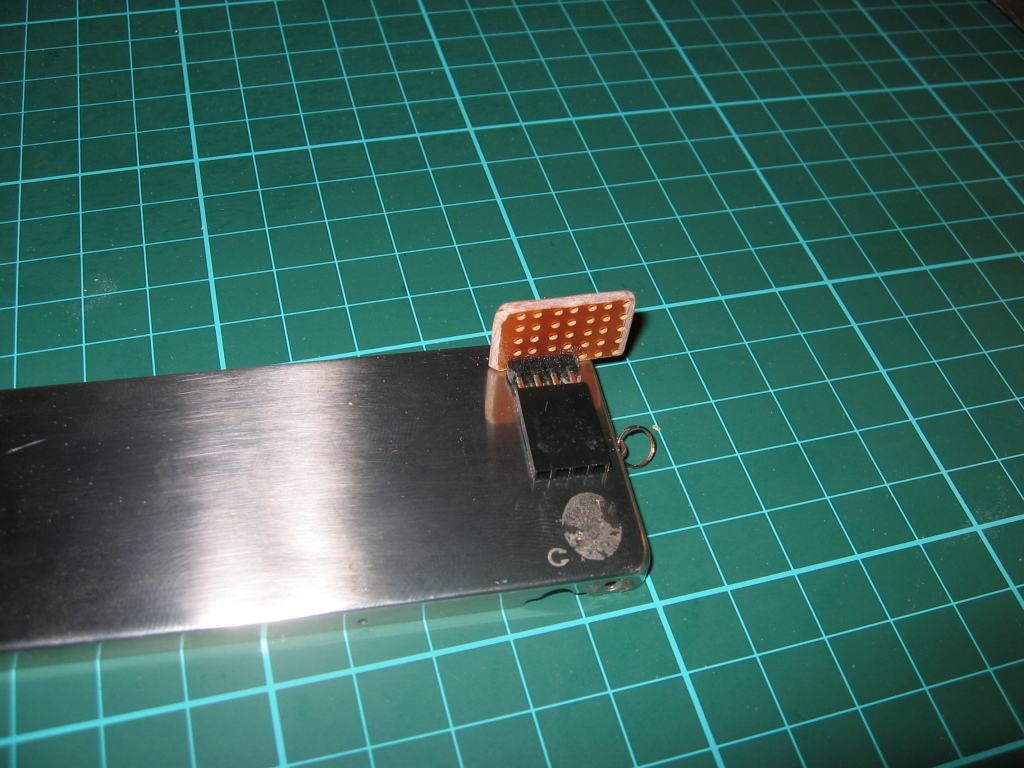
Then I mocked up the future plug and placement: the point is mechanically avoiding insertion of the reversed plug, and making the replacement not worse ergonomically than the original. The resulting plug is right-handed :-).
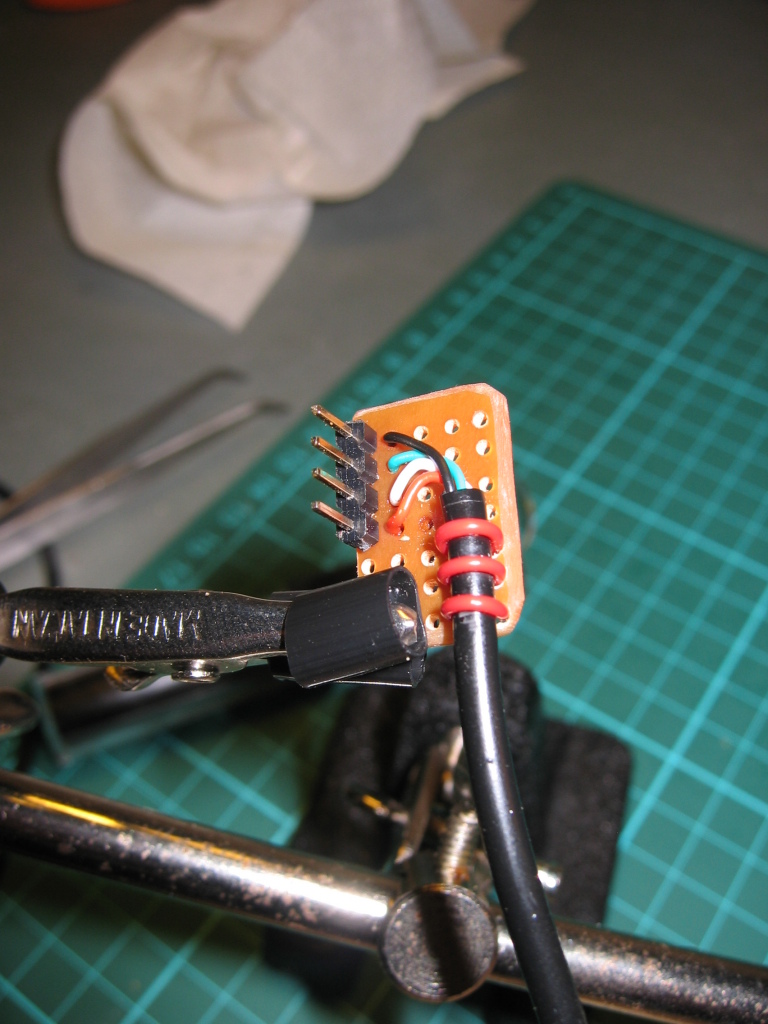
The dud nonstandard plug was cut off the player's cable and the bit of breadboard was soldered to the cable. I added a bit of strain relief (as the player is going to end up in my daughter's hands) and finally isolated the copper side by pouring an epoxy layer (with some blu-tack as "mould").

Finally the four extracted plugs from the cdrom cables were soldered to the other end of the ribbon cable, the plugs were reinserted into the plastic frame and I super-glued the whole shebang onto the back of the player.
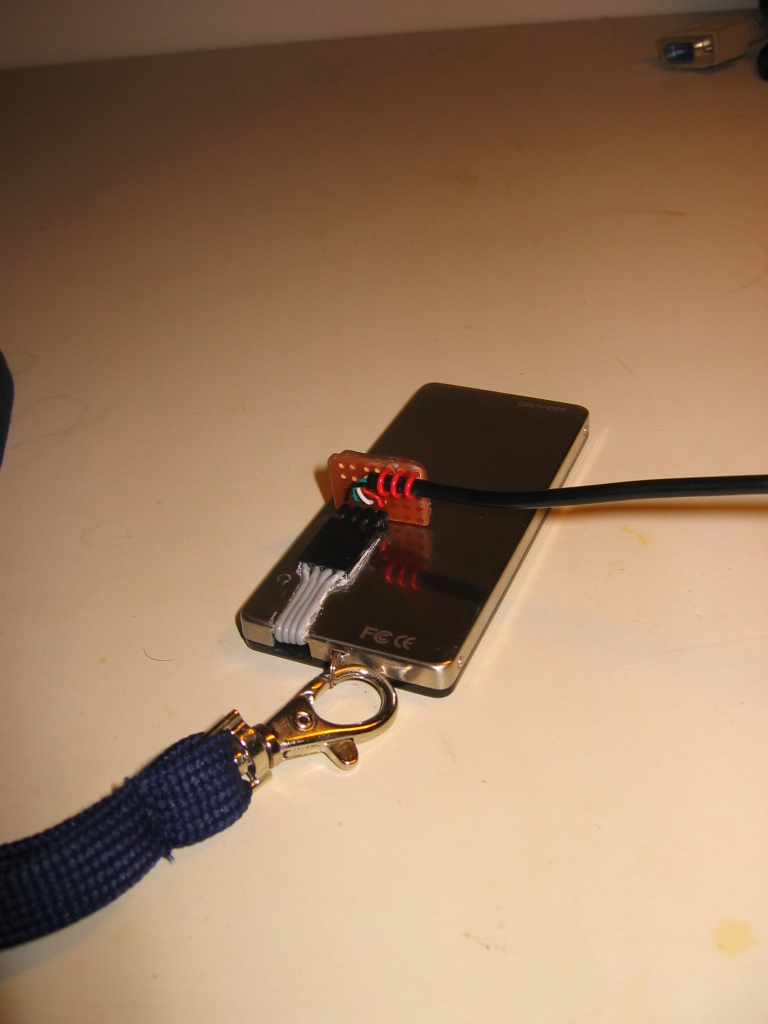
Net cost: an hour or so of fiddling, and some bits of scrap. Net result: it works again (modulo the really stooopid firmware), and that Plug Is Solid and will not break in normal use.